
What Is Jet Washing? Meaning, Uses and Safe Surfaces
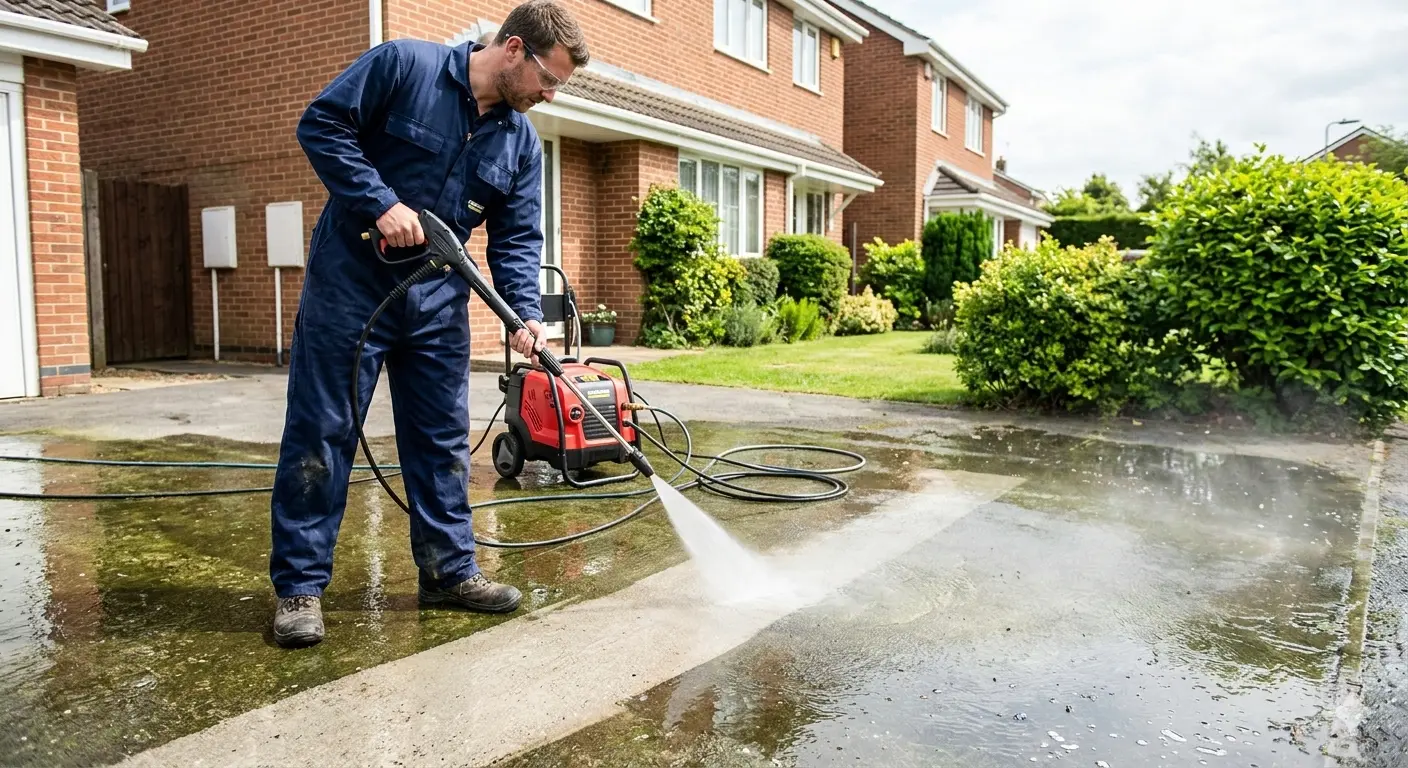
Jet washing is the cleaning of hard surfaces with a high pressure jet of water. The water leaves the machine at far greater force than a hosepipe, which lifts dirt, moss, algae and grime from driveways, patios, decking and walls in minutes. This guide explains what jet washing means, what you can and cannot clean with it and when it is worth calling a professional.
The terms jet washing and pressure washing are used interchangeably in the UK, and the 2 refer to the same process. We cover the details in our guide on jet washing vs pressure washing.
Jet Washing Meaning
A jet washer, also called a pressure washer, pumps water through a narrow nozzle to create a fast, concentrated spray. Pressure is measured in PSI or bar, and the water can be cold or heated. If you want to know what happens inside the machine, read how a jet wash works.
What Can You Jet Wash
- Concrete and tarmac driveways
- Block paving, patios and paths
- Sealed or hardwood decking
- Brick walls, boundary walls and garden steps
- Fences, gates and garden furniture
- Wheelie bins, bin stores and outdoor drains
- Vehicles, caravans and trailers at the right pressure
- Commercial forecourts, loading bays and shopfronts
Surfaces You Should Not Jet Wash
- Loose or damaged render, plaster and pointing
- Soft stone, old sandstone and weathered brickwork, unless very carefully
- Window frames, seals and old, flaking paint
- Electrical fittings, meter boxes and outdoor sockets
- Roof tiles and slates, which can crack or slip
- Lead flashing and loose gutters
If you are unsure whether a surface is safe, test a small hidden area first or ask a professional.
Common Jobs Jet Washing Is Used For
Driveways and patios
Jet washing removes moss, algae, oil marks and weed growth from paving. Block paving needs the joints re sanded afterwards, or weeds and moss return quickly.
Decking and fences
Timber needs a lower pressure and a wide fan nozzle, as strong jets raise the grain and leave marks. Sealing the wood after it has dried helps it last.
Commercial sites
Car parks, shopfronts, bin areas and entrances collect grease, gum and general grime. Professional equipment cleans them quickly and leaves an even finish.
Preparing for a Jet Washing Job
- Move vehicles, furniture and plants out of the area.
- Sweep away loose gravel, leaves and debris.
- Close windows and doors, and cover outdoor sockets.
- Check that the surface is sound before you start.
Safety Basics for Jet Washing
- Wear eye protection, waterproof boots and gloves.
- Never point the jet at people, pets or electrical fittings.
- Keep the nozzle at least 30cm from the surface to start with.
- Work with the lance at a slight angle so dirt is pushed away from you.
- Switch the machine off and release the pressure before changing nozzles.
What to Do After Jet Washing
- Let the surface dry fully, which can take 24 to 48 hours in damp weather.
- Re sand block paving joints with kiln dried sand.
- Apply a moss and algae treatment to slow regrowth.
- Re seal timber decking and consider sealing paving.
- Sweep away the remaining loose dirt and check for any marks.
When to Hire a Professional
A small patio or set of steps is a reasonable DIY job. Large driveways, delicate stone, oil staining, high walls and commercial sites are better handled by a trained team with the right nozzles and surface cleaners. Our jet washing services match pressure and technique to each surface. For nozzle choice and PSI settings, see our jet wash nozzle and PSI guide.
What Is Jet Washing FAQs
What is jet washing?
Jet washing is the cleaning of hard surfaces using a high pressure jet of water. The machine forces water through a narrow nozzle, which lifts dirt, moss, algae and grime from driveways, patios, decking and walls much faster than a hosepipe or a brush.
Is jet washing the same as pressure washing?
Yes. In the UK, jet washing and pressure washing describe the same process, and jet washer and pressure washer are the same machine. The names vary by region and brand, but the equipment, the pressure and the cleaning method are identical.
What can you jet wash?
You can jet wash driveways, patios, paths, decking, brick walls, fences, bins, vehicles and commercial forecourts. Use a gentler setting on timber and soft stone. Avoid loose render, window seals, roof tiles and electrical fittings, which can be damaged or let water in.
Can jet washing damage surfaces?
Yes, if the pressure is too high or the nozzle is too close. Jet washing can etch concrete, wash sand from block paving joints, raise the grain on timber and strip paint. Start on a low setting, keep the nozzle moving and test a hidden area first.
How often should you jet wash a driveway?
Most driveways need jet washing once a year, with an extra clean if moss, algae or oil stains build up. Shaded or damp driveways may need it twice a year, while a lightly used, sunny drive can go 18 months between cleans.