
Sustainability in commercial cleaning: what clients are asking for now
Sustainable commercial cleaning practices have shifted from a differentiating feature to a baseline procurement requirement for many institutional property owners and managing agents across the UK. Ask any London facilities manager what's changed about tendering a cleaning contract in the last few years, and carbon footprint questions come up almost immediately. What used to be a nice-to-have line in a proposal is now a standard item on the procurement checklist, and cleaning contractors who cannot answer these questions confidently are increasingly losing out before price even enters the conversation.
The New Baseline
- A clear majority of UK consumers, with some research putting the figure as high as 80%, now factor sustainability into purchasing decisions, a pressure that flows directly through to B2B procurement.
- Just 12% of major brands hold independently verified sustainability certifications, despite widespread green marketing claims, which is why certification has become the standard shorthand clients rely on in tenders.
- From 15 August 2026, every cleaning chemical used in a UK facility must comply with updated GB CLP hazard-labelling standards, a genuine compliance deadline that affects product selection now.
- Carbon reporting, not product choice, is the area that catches most smaller cleaning contractors off guard during procurement.
Why is sustainability now a requirement in cleaning tenders?
Sustainability has become a procurement requirement because regulatory pressure, investor expectations, and net zero commitments are pushing accountability down through supply chains, including cleaning contracts. A clear majority of UK consumers, with some research putting the figure as high as 80%, now factor environmental commitments into purchasing decisions, a pressure that flows directly through to B2B procurement.
Disclosure requirements tied to net zero commitments mean property owners reporting on their own environmental performance increasingly need their contractors, cleaning included, to answer detailed questions rather than offer vague reassurances. This is not limited to large corporates: commercial buyers across the board are treating sustainability credentials as a genuine deal-breaker rather than a differentiator.
Why did commercial cleaning end up on the sustainability agenda?
Commercial cleaning sits on the sustainability agenda because it represents a genuinely material environmental footprint within most commercial properties. Cleaning contractors typically represent the largest facilities management workforce present in a commercial property day to day. That scale means chemical use, water consumption, waste generation, and staff travel all add up to a measurable line in a building's overall environmental impact.
Regulatory pressure and investor expectations have accelerated this scrutiny significantly, making cleaning contracts a logical focus when property owners are trying to demonstrate credible supply chain accountability. If your building also has specific hygiene compliance obligations alongside sustainability ones, it's worth reading this alongside our restaurant kitchen compliance guide, which covers a parallel set of regulatory pressures in a food-service setting.
What are clients actually asking in cleaning procurement?
Clients now ask specific, technical questions in cleaning tenders, not general "are you eco-friendly?" enquiries. Property managers and facilities teams commonly ask about:
- Product certification standards — which independent eco-labels products carry
- Carbon reporting methodology — how a contractor quantifies emissions associated with the contract
- Water and energy use — during cleaning operations specifically
- Waste disposal practices — including packaging across the full supply chain
Certification has become a useful shorthand in these conversations because it is independently verified rather than self-declared. Just 12% of major brands hold independently verified sustainability certifications, despite widespread green marketing claims — a gap that tells you certification is doing real work distinguishing substance from marketing language. Carbon reporting specifically catches many smaller cleaning contractors off guard. Being able to quantify emissions associated with a cleaning contract — vehicle travel between sites, energy used in laundering microfibre cloths, water heating for certain cleaning processes — is a genuinely different skill from running a good cleaning operation, and it is increasingly expected as standard rather than exceptional.
What's changing under the August 2026 chemical regulations?
From 15 August 2026, every cleaning chemical used in a UK commercial facility must comply with updated GB CLP (Classification, Labelling and Packaging) hazard standards. This is a genuine, dated compliance requirement, not a voluntary sustainability initiative, and it sits alongside the tender-level questions clients are already asking.
| Requirement | What it means for cleaning contracts |
|---|---|
| Updated GB CLP hazard labelling | All chemicals used from 15 August 2026 must carry compliant hazard classification and labelling |
| Product audits | Contractors should confirm supplier compliance ahead of the deadline, not after it |
| Documentation | Safety data sheets should be current and readily producible during a tender or audit |
For facilities managers, this is worth raising directly in any tender issued after this date: ask whether a contractor's full chemical inventory has already been reviewed against the updated standard, rather than assuming compliance is automatic.
What product changes are clients expecting on the trolley?
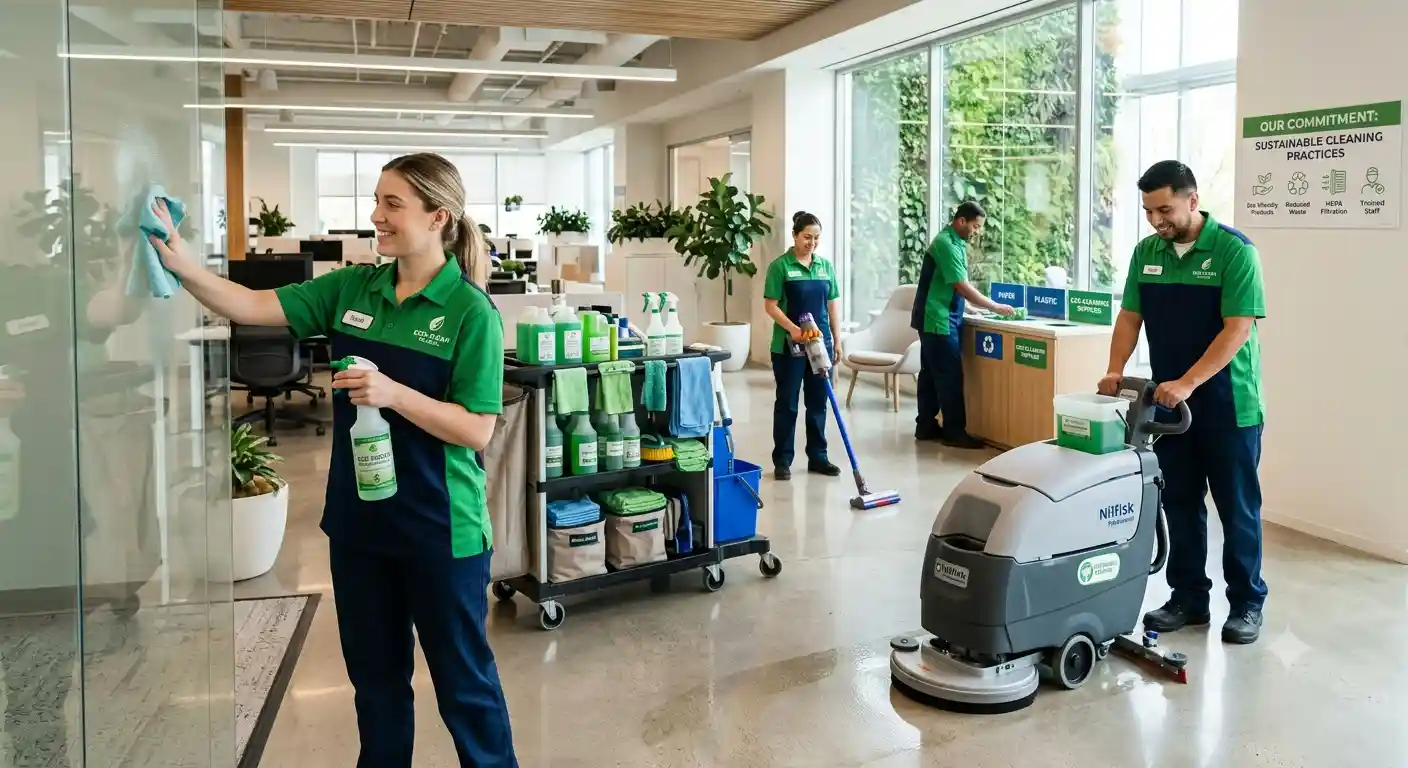
The most visible, practical change clients notice first is product selection, and this is where genuine sustainability progress is easiest to demonstrate. Common requests in tender specifications now include:
- Concentrate-based products that reduce packaging waste and transport volume
- Biodegradable formulations that break down without leaving persistent chemical residue
- Refillable systems replacing single-use plastic packaging
- Microfibre cleaning systems that reduce both water and chemical use significantly compared to traditional mop-and-bucket methods
Microfibre systems have become close to standard practice among contractors positioning themselves credibly on sustainability. The logic is straightforward: microfibre lifts more dirt with less product and less water, which delivers a genuine environmental improvement that is also easier to explain to a client than more abstract carbon accounting. It is worth noting that switching products is not purely a sustainability decision in isolation. Cost, staff training requirements, and cleaning effectiveness all still matter. Contractors doing this well tend to frame product changes as improvements across all three dimensions, rather than a pure environmental trade-off.
How does waste reduction work in commercial cleaning?
Meaningful waste reduction in commercial cleaning goes beyond recycling — it includes reducing waste generated by the cleaning process itself. Practical areas include:
- Reducing single-use cloth and mop-head waste
- Moving toward refillable chemical dispensing systems rather than individually packaged bottles
- Reviewing packaging across the entire supply chain, not just front-line products
Water use deserves specific attention. Traditional bucket-and-mop cleaning uses considerably more water than modern microfibre and controlled-dosing systems. Reviewing water use specifically, rather than treating it as a fixed cost of the job, is increasingly how contractors demonstrate genuine environmental improvement rather than surface-level green messaging.
Why does staff training matter for sustainable cleaning?
Sustainable cleaning products and methods only deliver their promised environmental benefit if staff are trained to use them correctly. Correct dilution ratios matter enormously for biodegradable and concentrate-based products. Over-dosing not only wastes product and money but often undermines the environmental benefit the product was chosen for in the first place. Contractors who invest visibly in this training, and can describe it specifically during procurement, tend to come across as considerably more credible than those simply listing product names on a specification sheet.
Which certifications and standards are worth knowing?
For clients assessing genuine sustainability credentials, recognised third-party certifications provide a reliable filter, since they require independent verification rather than self-reported claims. Given that just 12% of major brands hold verified certification despite widespread green marketing, asking specifically which certifications a contractor's products and processes hold is one of the more efficient ways to separate genuine practice from surface-level positioning.
For cleaning contractors, investing in certified products and documenting environmental performance clearly is increasingly a competitive necessity, particularly for businesses hoping to win contracts with institutional or larger corporate clients who face their own reporting obligations further up the supply chain.
Does sustainable commercial cleaning cost more?
Sustainable cleaning products often carry a higher upfront cost, but the full cost picture is more nuanced than headline product prices suggest. Certified green products and systems like controlled-dosing dispensers typically cost more than conventional equivalents upfront. However, concentrate-based systems reduce transport and storage costs through the supply chain, microfibre systems reduce water and chemical consumption over time, and contractors who have made the transition properly often find total cost of ownership evens out, or improves, once these efficiencies are factored in rather than comparing product prices in isolation.
How can smaller cleaning businesses compete on sustainability?
Smaller, independent cleaning businesses can often move faster on practical sustainability changes than larger contractors, and compete effectively in tenders with the right documentation. Switching to concentrate systems, adopting microfibre, and choosing certified products does not require a large compliance team. What smaller contractors often lack is the documentation and reporting infrastructure that institutional clients expect. A clear, honest one-page summary of which products are used, which certifications they carry, and how usage is tracked can go a long way in a tender process, even without the sophisticated carbon reporting systems a large multinational contractor might offer.
How to tell genuine sustainability from surface-level positioning
A genuinely sustainable contractor can answer detailed follow-up questions confidently, specific certifications, actual dilution and dosing processes, and how staff training is structured, rather than retreating to general reassurances when pressed. One practical test during procurement is asking a contractor to walk through a single product's full lifecycle: from concentrate delivery through dilution, use, and eventual disposal or recycling of packaging. Contractors doing this well answer in specific, operational detail. Those relying mainly on marketing language tend to struggle once questions move past the headline claims on a product label.
What this means for facilities managers and cleaning contractors
For property owners and facilities managers reviewing cleaning contracts: ask specific, evidence-based questions rather than accepting general reassurance. What certifications do the products carry? Can the contractor provide any form of carbon or water use reporting? Has the full chemical inventory already been reviewed against the updated GB CLP standard? What is the actual training process for staff using sustainable systems, not just what products are listed on the tender document?
For cleaning contractors: sustainability credentials have moved from a marketing angle to a genuine procurement requirement among a growing share of commercial clients. Contractors investing now, in certified products, staff training, and the ability to document environmental performance clearly, are best positioned as this becomes standard practice across the wider market rather than a differentiator for a forward-thinking minority. If you'd like a second opinion on where your current contract stands, you can get in touch about a compliance-ready contract, or have a look around the rest of our site for our wider commercial cleaning services.
Frequently asked questions
Do sustainable cleaning products clean as effectively as conventional ones?
Generally yes, particularly with modern microfibre and concentrate-based systems. Correct dilution and proper staff training matter significantly for results — poorly trained application of any product, sustainable or otherwise, tends to underperform regardless of the underlying formulation.
Why do certifications matter so much when assessing green cleaning claims?
Because self-declared "eco-friendly" claims vary enormously in substance. Genuinely certified green products demonstrate independently verified environmental credentials, whereas only around 12% of major brands hold recognised certification despite widespread green marketing — a gap that illustrates how much this distinction matters in practice.
Is sustainable commercial cleaning always more expensive?
Products can carry a higher upfront cost, but efficiencies from concentrate systems, reduced water use, and lower packaging waste often narrow or close the gap over time, particularly for contracts assessed on total cost of ownership rather than headline product price alone.
What should a facilities manager ask a cleaning contractor about sustainability during procurement?
Ask specifically about product certifications, carbon or water reporting the contractor can provide, and how staff are trained on sustainable systems. Specific, evidence-based answers indicate genuine practice; vague reassurances generally do not.
How are net zero commitments affecting cleaning contracts specifically?
Net zero disclosure requirements mean property owners must account for their full supply chain's environmental impact. Cleaning contractors, as one of the most operationally present suppliers in a commercial building, now sit directly in scope of those reporting obligations, which is why sustainability questions have moved from optional to standard in tender documents.
What changes under the GB CLP rules from August 2026?
From 15 August 2026, every cleaning chemical used in a UK facility must carry hazard labelling compliant with the updated GB CLP standard. Contractors should confirm their full chemical inventory has already been reviewed rather than assuming compliance happens automatically.