
Commercial Jet Wash Safety: Pro Tips and Equipment Guide
Welcome to the high-pressure, high-stakes world of commercial surface cleaning and industrial pressure washing. When you fire up a commercial jet wash, you are taking control of a formidable tool. Capable of blasting away decades of grime, stripping industrial paint, and restoring surfaces to their original glory, these machines are indispensable for modern facility maintenance.
However, with immense power comes significant risk. Whether you are operating a top-tier professional pressure washer or an entry-level industrial jet washer, the hazards associated with high-velocity water streams are very real. From physical injuries and property damage to environmental fines, neglecting safety protocols can be disastrous. In this comprehensive guide, we will explore the critical safety measures, proper gear, and environmental protocols necessary to operate this machinery safely. For those seeking Professional Commercial Jet Washing Services, understanding these safety principles is the foundation of quality workmanship.
Ultimately, prioritizing safety is not just about compliance; it directly enhances the cost effectiveness of professional cleaning services by preventing accidents, minimizing equipment downtime, and avoiding costly lawsuits.
Understanding Your Equipment: Power Brings Responsibility
Before you pull the trigger on any power washing equipment or professional jet wash, you must understand the mechanics of the machine in front of you. A standard garden hose delivers water at around 40 to 60 PSI (Pounds per Square Inch). A commercial power wash machine, however, can easily exceed 4,000 PSI. At this level, water acts like a blade.
High PSI vs High GPM Explained
To operate safely, you need to understand the two main metrics of your machine:
- PSI (Pounds per Square Inch): This measures the stripping power or pressure of the water. High PSI is what breaks the bond between dirt and the surface. From a safety standpoint, high PSI poses severe cutting and injection hazards.
- GPM (Gallons per Minute): This measures water flow or volume. High GPM determines how quickly you can rinse debris away. A high GPM creates strong "kickback" or recoil when you squeeze the trigger, which can easily knock an unprepared operator off balance.
For contractors looking to invest in the best commercial pressure washer, balancing these two metrics for your specific task is vital. If you are searching for heavy duty pressure washers UK suppliers offer, you will find that safety certifications and auto-shutoff features are standard requirements for high PSI/GPM models. Partnering with Trusted Commercial Cleaning & Maintenance Experts ensures you receive proper guidance on equipment selection and safe operation.
Essential Safety Gear for Professional Pressure Washing
Operating a heavy duty power washer is not a task for shorts and flip-flops. High-pressure injection injuries—where water and toxic chemicals are forced under the skin—are medical emergencies that can lead to amputation if untreated.
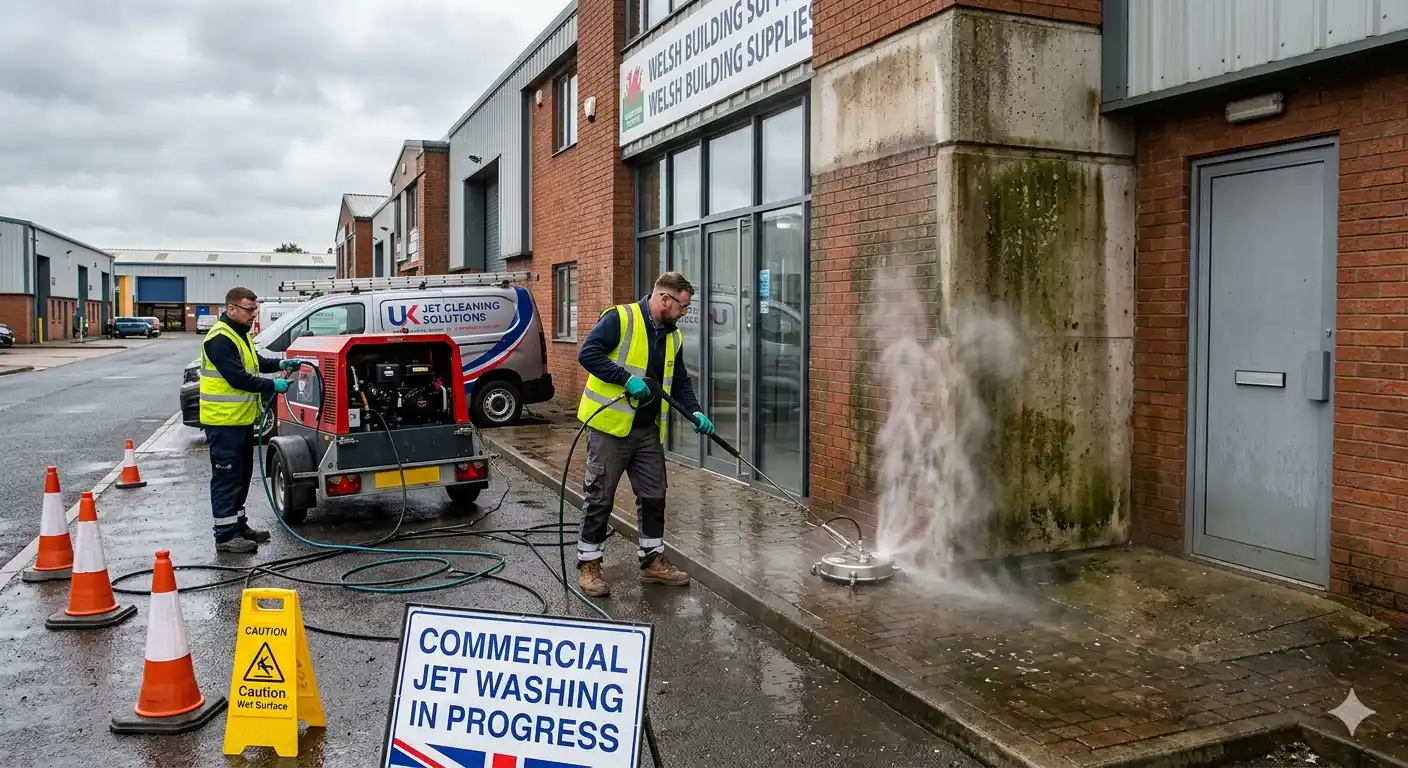
When utilizing commercial pressure washing equipment, the following Personal Protective Equipment (PPE) is non-negotiable:
- Eye and Face Protection: Flying debris is inevitable. Always wear wrap-around safety goggles or a full-face shield to protect against ricocheting rocks and dirt.
- Heavy-Duty Footwear: Steel-toed, slip-resistant waterproof boots are mandatory. A heavy duty pressure cleaner can easily slice through standard canvas or leather shoes.
- Protective Gloves: Thick, rubberized gloves provide better grip on the wand and protect your hands from abrasions and chemical exposure.
- Hearing Protection: A petrol-driven industrial pressure washer can generate noise levels exceeding 90 decibels. Earplugs or earmuffs protect against long-term hearing loss.
- Waterproof Overalls: Tough, reinforced waterproof suits keep chemicals and contaminated water off your skin.
Site Preparation and Hazard Mitigation
A professional jet wash requires more than just gearing up; the environment must be meticulously prepared before the engine is started.
Electrical Hazards and Area Securing
Water and electricity are a fatal combination. Before conducting any professional pressure washing, identify and cover all outdoor electrical outlets, lighting fixtures, and exposed wiring. Cordon off the work area with cones or caution tape to prevent pedestrians from wandering into the path of your commercial jet washers.
Managing Runoff and the Environment
Safety extends to the local ecosystem. When dealing with industrial pressure washing, you are often removing toxic substances like oil, grease, and heavy metals. Operators must strictly adhere to environmental regulations for industrial runoff. Allowing contaminated wastewater to flow directly into storm drains is illegal and environmentally damaging.
To comply with these laws, utilize water reclamation systems for mobile washing. These vacuums attach to the washing area, sucking up the dirty water, filtering it, and safely storing it for proper disposal. Furthermore, choosing the right accessories, like using the best surface cleaners for large areas (often called flat surface rotary cleaners), keeps the water contained under a dome, drastically reducing dangerous overspray and toxic splash-back.
Specific Cleaning Applications and Safety Tactics
Different surfaces require different safety approaches. Using a one-size-fits-all method with industrial pressure washing equipment is a recipe for property damage and injury.
Concrete and Parking Lots
Understanding how to clean commercial concrete surfaces safely involves a careful assessment of the area. Look for existing cracks or loose aggregate; hitting these with a high-pressure stream can turn loose concrete into dangerous projectiles.
When removing oil stains from parking lots, operators frequently face the debate of hot vs cold water power washing. Hot water units are incredibly efficient at melting away grease, but they introduce the severe hazard of scalding. When using a hot water industrial jet wash, operators must use insulated lances, check hoses for thermal degradation, and ensure no one is standing within the splash zone.
Machinery and Fleet Vehicles
Maintaining fleet vehicles with pressure systems is essential for logistics companies, but it poses unique risks. High-pressure water can easily destroy vehicle radiators, strip decals, and force water into delicate engine electronics.
Instead of relying solely on brute force, use chemical assistance. Utilizing biodegradable degreasers for heavy machinery allows you to lower the PSI while still achieving a flawless clean. This not only protects the vehicle but also ensures that any accidental runoff is less toxic, protecting both the operator and the environment.
Exteriors and Delicate Surfaces
Not every job requires the sheer violence of a heavy duty pressure washer. Professional building exterior cleaning techniques heavily favor caution to avoid pushing water behind siding or shattering windows. What Is Jet Washing? Methods, Benefits & Safety Basics provides a foundational understanding of when to apply different techniques.
This brings us to a vital question: what is soft washing for delicate surfaces? Soft washing utilizes low pressure (often barely more than a garden hose) combined with specialized chemical mixtures—like sodium hypochlorite and surfactants—to kill algae, mold, and mildew at the root. It is the safest way to clean roofs, stucco, and historical facades without causing structural damage.
Conversely, if you are doing surface preparation for industrial painting, you may need to use a professional jet washer at maximum pressure to blast away rust and flaking paint. In these cases, respiratory protection becomes crucial, as you may be vaporizing lead-based paints or other hazardous materials.
Maintaining Your Commercial Pressure Washing Equipment
Safety on the job site begins in the maintenance shed. A poorly maintained professional power washer or industrial pressure washer is a ticking time bomb. High-pressure hoses degrade over time due to UV exposure, being dragged across concrete, and general wear and tear. A burst hose operating at 4,000 PSI can act like a whip, causing severe injuries.
Routine Safety Checks Should Include:
- Hose Inspections: Check daily for abrasions, kinks, or exposed wire mesh. If the structural integrity of the hose is compromised, replace it immediately.
- O-Ring Replacements: Leaking connections can reduce pressure and cause unpredictable spray patterns. Always carry spare O-rings.
- Pump Maintenance: Preventing pump damage in industrial washers is vital. Never leave the machine running in bypass mode (with the trigger un-squeezed) for more than a minute or two, as the water inside the pump will rapidly heat up and destroy the seals. Use thermal relief valves to mitigate this risk.
- Engine Care: For petrol and diesel models, regular oil changes, air filter cleanings, and spark plug checks ensure the machine runs smoothly without stalling or misfiring during a critical job.
For anyone looking to purchase the best commercial pressure washer UK retailers have to offer, or indeed anywhere else in the world, always factor the cost and ease of maintenance into your decision. A machine that is easy to service is much more likely to remain safe over its lifespan. For individuals searching for a reliable professional pressure washer UK, safety guidelines also highly recommend annual servicing by a certified technician.
Conclusion
Mastering a commercial jet wash is an incredibly rewarding skill that yields satisfying, highly visible results. However, the sheer kinetic energy produced by a professional pressure washer commands total respect. By understanding the capabilities of your heavy duty pressure washers, wearing the correct protective gear, adhering to environmental regulations, and carefully tailoring your approach to the surface at hand, you mitigate the myriad of risks involved in industrial cleaning.
Whether you are performing a delicate soft wash on a heritage building or using a heavy duty pressure cleaner to blast oil from a warehouse floor, safety must dictate every action you take. Cultivating a culture of safety not only protects you and your team, but it ensures you deliver exceptional, professional results every single time.
Q&A
Question: Why do PSI and GPM matter, and how should I balance them for a job?
Short answer: PSI is the cutting force that breaks the bond between contaminants and the surface, but it also creates severe cutting and injection hazards. GPM is the water volume that flushes debris; higher flow speeds up rinsing but adds kickback that can unbalance operators. Match PSI to how tough the buildup is, and use enough GPM to rinse efficiently without losing control. For high-PSI/GPM machines, prioritize units with safety certifications and auto-shutoff features.
Question: What PPE is non-negotiable for commercial jet washing, and what risks does it mitigate?
Short answer: At minimum: wrap-around safety goggles or a face shield (flying debris), steel-toed slip-resistant waterproof boots (jets can slice standard footwear), thick rubberized gloves (grip, abrasion, chemical protection), hearing protection (petrol units often exceed 90 dB), and reinforced waterproof overalls (keeps chemicals/contaminants off skin). This kit reduces the risk of high-pressure injection injuries, lacerations, chemical exposure, and long-term hearing loss.
Question: How should I manage wastewater and environmental risks during industrial pressure washing?
Short answer: Never allow contaminated runoff to enter storm drains—it's illegal and harmful. Use water reclamation systems that vacuum, filter, and store wastewater for proper disposal. Choose accessories that contain spray, such as flat surface rotary cleaners with domes, to minimize overspray and toxic splash-back. When suitable, use biodegradable degreasers so effective cleaning can be done at lower PSI with less-toxic runoff.
Question: When should I choose soft washing over high-pressure cleaning?
Short answer: Use soft washing for delicate or water-intrusion-prone surfaces like roofs, stucco, siding, and historical facades. It applies very low pressure with targeted chemistry (e.g., sodium hypochlorite plus surfactants) to kill algae, mold, and mildew at the root without structural damage. Reserve high pressure for heavy prep tasks like stripping rust or flaking paint—and add respiratory protection when coatings may contain lead or other hazardous materials.
Question: What routine maintenance prevents failures and injuries with commercial pressure washers?
Short answer: Inspect hoses daily for abrasions, kinks, and exposed wire mesh; replace compromised lines immediately. Keep spare O-rings to stop leaks and erratic spray. Protect the pump by avoiding extended bypass (no more than 1-2 minutes) and fitting a thermal relief valve. For petrol/diesel units, stay current on oil, air filters, and spark plugs to prevent stalling under load. Choose equipment that's easy to service and schedule annual checks with a certified technician to keep the system safe over its lifespan.