

Blocked Gutter Signs: What to Look For and Why It Matters
A blocked gutter rarely stays quiet. Water leaves clues long before it reaches the walls or the ceiling, and spotting them early keeps a small blockage from turning into damp, rot or a leaking roof. This guide covers the signs you can see from the ground, the signs inside the property and what happens if you leave a blockage alone.
Signs of Blocked Gutters You Can Spot Outside
Walk around the property in or just after heavy rain, when problems are easiest to see.
- Water spilling over the front edge instead of running to the downpipe.
- Plants, grass or moss growing out of the gutter or its joints.
- Sagging or pulled away sections where the weight of debris is bending the brackets.
- Dark streaks or green staining on the wall beneath a joint or corner.
- A dry downpipe while the gutter above it is full of water.
- Puddles or soil washed away next to the base of the wall.
- Birds, wasps or rodents using the gutter as a nesting spot.
Signs of a Blockage Inside the Property
- Damp patches, brown stains or peeling paint on ceilings and upper walls near the eaves.
- A musty smell in loft rooms, bedrooms or hallways on outside walls.
- Black mould in the corners of rooms below the roofline.
- Wet or damp insulation and timbers if you can see into the loft.
Where Blockages Usually Form
Debris does not spread evenly along a gutter. It collects in the same places, so these are the spots to check first.
- Outlets and downpipe entrances: the narrowest point, where leaves and silt pack together.
- Internal corners and stop ends: water slows here and debris settles.
- Low points in the run: a sagging section holds water and silt.
- Beneath overhanging branches: the heaviest leaf fall lands in the same stretch each year.
- Valleys where 2 roof sections meet: a lot of water and debris is channelled into one gutter.
Blocked Gutter or Faulty Gutter?
Not every overflow is caused by debris. A gutter that has slipped out of level, a cracked joint or a downpipe that has come loose can give the same symptoms. If the gutter is clear but water still pours over or drips at a joint, the system needs repair or realignment rather than another clean.
What Happens If You Ignore a Blocked Gutter
Damp and rot
Overflowing water soaks the fascia, soffit and the brickwork beneath. Timber starts to rot, paint blisters and damp can travel into the wall and show up as stains indoors.
Roof and fascia damage
Standing water sits against the roof edge and can work its way under tiles. In winter, trapped water freezes, expands and can crack or pull gutters away from the fascia.
Ground and foundation problems
Water that spills straight down the wall soaks the ground at the base of the building. Over time this can undermine paths and patios and make foundations less stable.
Pests
Wet leaf litter attracts insects, birds and rodents, and nests add to the blockage. Wasps and hornets are more likely to settle in damp debris near the roofline.
Why Gutter Cleaning Is Worth Doing
For most properties, yes. Clearing a gutter is a short, routine job, while the damage from a neglected one spreads to the roof, walls and interior and takes far longer to put right. Regular cleaning also keeps the gutter itself working for longer, as standing weight is what bends brackets and splits joints.
What to Do When You Spot a Blockage
- Do not climb a ladder in the rain or on a windy day. Wait for dry weather.
- Check from the ground whether the downpipe is running or dry.
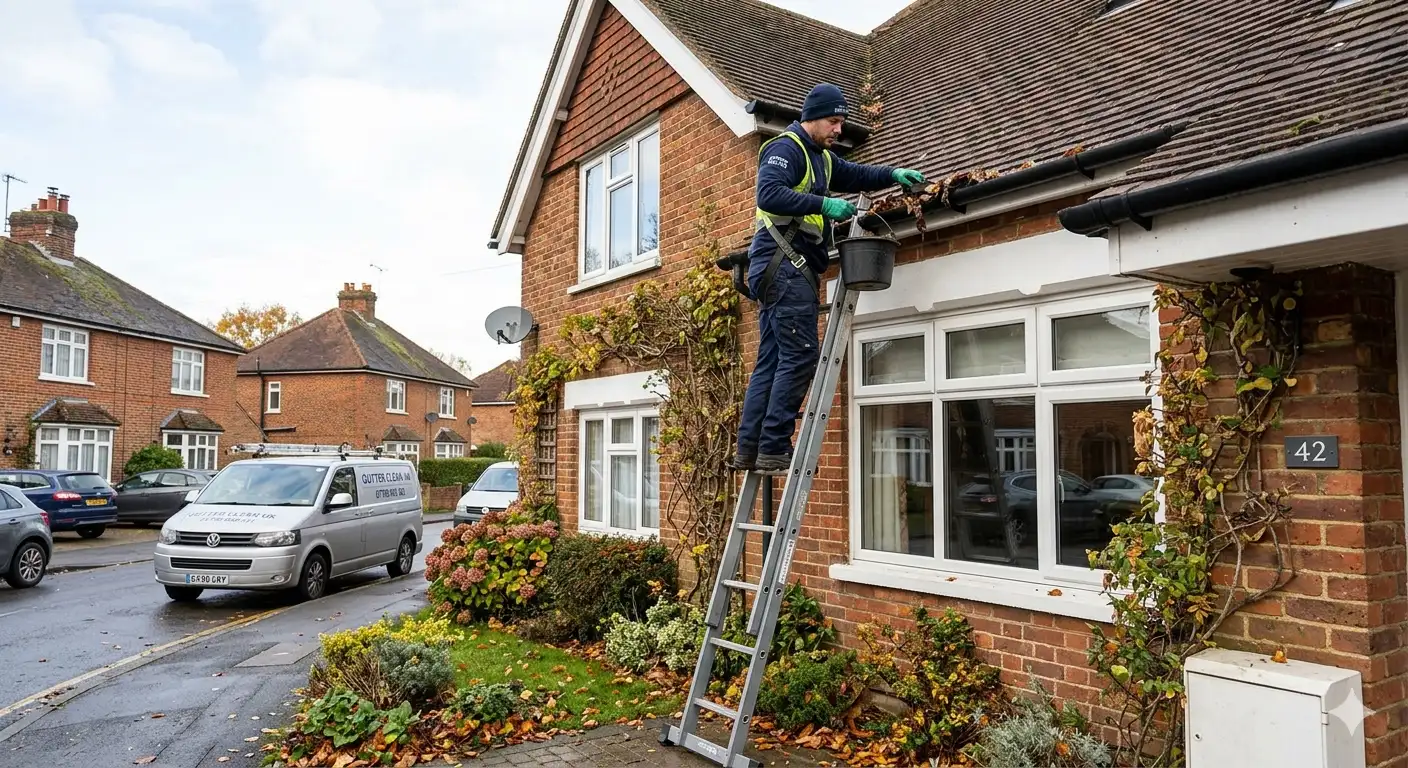
- Clear the gutter by hand, with a pole attachment or a gutter vacuum. Our guide to cleaning gutters safely covers the steps.
- Flush the system with a hose and watch for leaks at the joints.
- Book a professional team if the gutter is high, the roof is steep or you can see damage. Our gutter cleaning service covers homes and businesses.
Blocked Gutter Signs FAQs
What are the first signs of blocked gutters?
The first signs are water spilling over the front edge in rain, plants or moss growing out of the gutter, and a downpipe that stays dry. Sagging sections and dark streaks on the wall below a joint usually follow. Any of these means the gutter needs clearing soon.
Can blocked gutters cause damp inside the house?
Yes. Overflowing water soaks the fascia, soffit and outer wall, and damp can travel through the brickwork. It often shows as brown stains, peeling paint or mould on upper walls and ceilings near the eaves, usually after a spell of heavy rain.
Why is water pouring over my gutter when it rains?
Water pours over the edge when debris stops it reaching the downpipe. The cause may be leaves, moss, silt or a blocked outlet. A gutter that has slipped out of level can also hold water in one section. Clear the blockage and check the fall.
Is it safe to clean a blocked gutter in the rain?
No. Wet ladders, slippery gutters and poor visibility make falls far more likely. Wait for a dry, calm day. If the overflow is causing damage right now, protect the area below and book a professional team with proper access equipment.
Is gutter cleaning worth it?
For most properties it is. Clearing a gutter is a short routine job, while a neglected one can lead to damp, rot and roof damage that take far longer to repair. Regular cleaning also stops the weight of debris bending brackets and splitting joints.