

Gutter Cleaning Methods Compared: Hand, Pole and Vacuum
Gutter cleaning means removing leaves, silt, moss and other debris from the gutters and downpipes so rainwater can drain away. How it is done matters as much as when. Cleaning by hand from a ladder, using a pole attachment and using a gutter vacuum all work, but they suit different properties. This guide compares each method so you can pick the right one.
What Gutter Cleaning Involves
A proper gutter clean has 4 parts: removing loose debris, scooping out the silt and moss, flushing the run with water, and checking that every downpipe drains. Joints, brackets and outlets are inspected as the work goes along, so small faults are caught before they leak.
Gutter Cleaning Methods Compared
By hand from a ladder
The traditional method. You remove debris with a gloved hand or trowel and flush the gutter with a hose. It gives the most thorough result on low, accessible gutters, but it means working at height with one hand on the ladder, so it carries the highest risk.
Pole and hose attachments from the ground
A pole fitted with a curved hose or scoop head lets you clean from ground level. It suits single storey roofs and short runs. Results are less precise than cleaning by hand, and you cannot see inside the gutter, but it avoids ladder work.
Gutter vacuum with extension poles
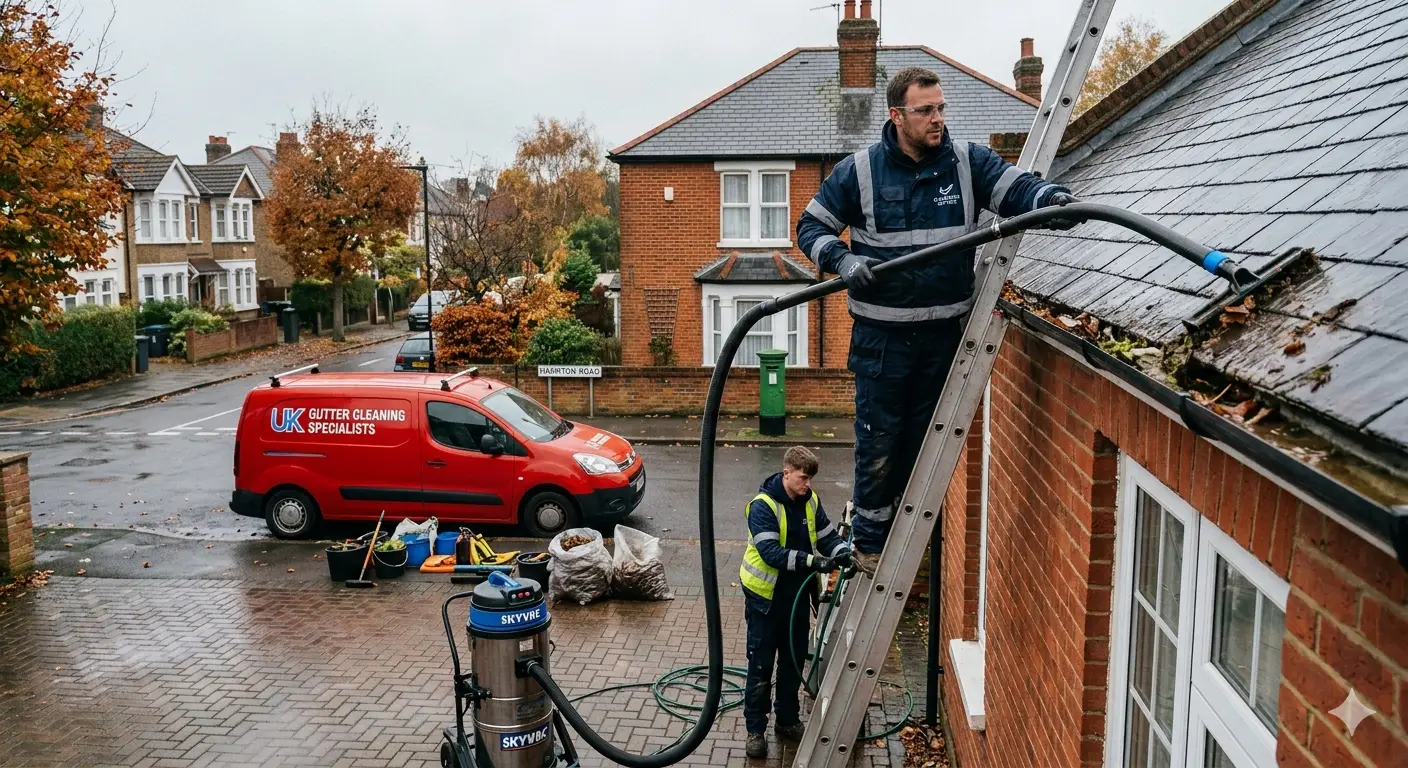
A gutter vacuum uses suction through extension poles to pull debris out of the gutter and into a collection bag. Professionals use it on 2 and 3 storey buildings, where a camera on the pole shows the inside of the gutter as the work goes on. Wet, compacted silt is harder to lift, so it works best on regular, light cleaning.
Flushing and jetting
Flushing with water from a hose or a low pressure lance clears loose silt and tests the downpipes. High pressure jetting inside a gutter is not recommended, as it can blow joints apart and send dirty water up under tiles.
Gutter Cleaning vs Gutter Vacuum
Manual gutter cleaning is better for heavy moss, compacted silt and low roofs where you can reach safely. A gutter vacuum is better for tall buildings, large roofs and routine clears where the debris is light and dry. Many professional teams use both, vacuuming first and then finishing by hand and flushing.
Which Method Suits Which Property
- Bungalows and single storey extensions: a pole attachment or hand cleaning from a stable ladder.
- 2 storey houses: a gutter vacuum with poles, or a professional team with proper access equipment.
- 3 storey homes and flats: professional access equipment, as ladders are rarely safe at that height.
- Commercial roofs and warehouses: a professional team with a vacuum system or a mobile access platform.
- Gutters full of moss or compacted silt: hand cleaning first, then flushing.
Safety and Access
- Never lean a ladder directly on the gutter. Use a stand off bracket or ladder stabiliser.
- Keep 3 points of contact on the ladder at all times.
- Stay away from overhead power lines and wires.
- Wear gloves and eye protection, as debris can contain bacteria and sharp fragments.
- Get a second person to foot the ladder where possible.
How a Professional Clean Differs From a DIY Clear
- Access: professionals use poles, platforms or towers rather than a single ladder.
- Inspection: a camera on the pole shows the inside of the gutter and any joint faults.
- Disposal: debris is bagged and taken away rather than dropped into borders or on paths.
- Flush test: every downpipe is run to prove the water is draining.
- Reporting: loose brackets, cracked sections and leaks are noted for repair.
When to Use a Professional
A professional team brings the access equipment, a camera pole and the experience to check joints and downpipes as they clean. It is the safer choice for tall, steep or hard to reach roofs. For step by step DIY instructions, read our guide on how to clean gutters safely, or see our gutter cleaning services if you would rather book it.
Gutter Cleaning Methods FAQs
What is gutter cleaning?
Gutter cleaning is the removal of leaves, silt, moss and other debris from gutters and downpipes so rainwater drains away properly. A full clean also includes flushing the system with water and checking joints, brackets and outlets for leaks or damage before they cause problems.
Is a gutter vacuum better than cleaning by hand?
A gutter vacuum is better for tall buildings and light, dry debris because it works from the ground through extension poles. Hand cleaning is better for compacted silt and heavy moss. Many professional teams combine both to get a thorough result.
Can you clean gutters with a pressure washer?
A pressure washer is not recommended inside gutters. High pressure can split joints, loosen brackets and force dirty water under roof tiles. A hose or low pressure lance is fine for flushing loose silt and checking that the downpipes drain.
What tools do I need to clean gutters?
For hand cleaning you need a stable ladder with a stand off, gloves, a trowel or scoop, a bucket and a hose. For ground level work, a pole with a hose attachment or a gutter vacuum kit with extension poles replaces the ladder.
How long does gutter cleaning take?
A typical house takes 1 to 2 hours, depending on its size, the height of the roof and how much debris is packed in. Heavy moss, long runs and difficult access add time. Commercial buildings and large roofs usually take longer.