

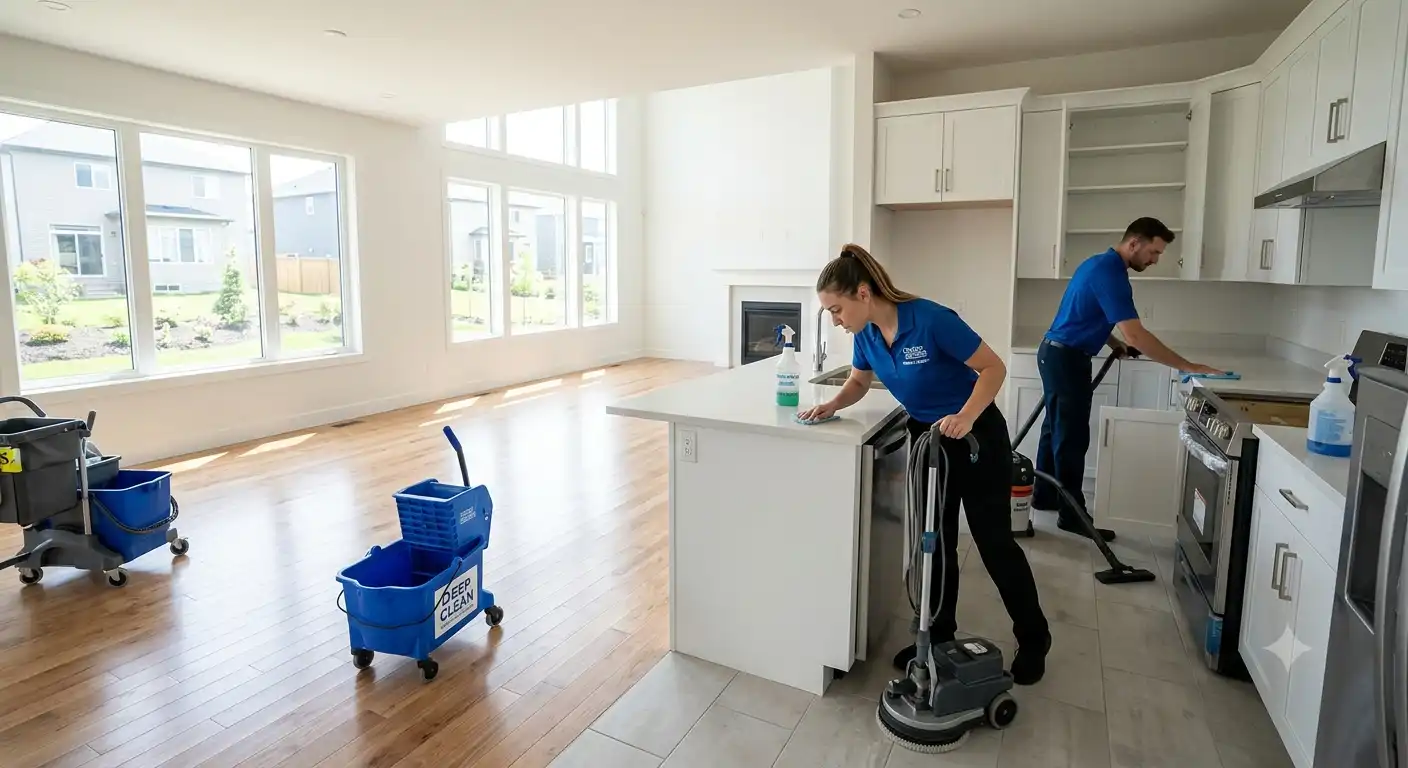
Move-in deep clean: why new homes aren't always as clean as you think
Most people assume picking up the keys to a new home means starting fresh, including a genuinely clean property. In practice, whether you're moving into a new build or a previously occupied home, that assumption is rarely correct. Move-in deep cleaning before you unpack is one of the most practical steps you can take to protect your health and actually start fresh.
This guide explains why homes aren't truly clean when you arrive, when to clean, where dust hides, and how to approach the job properly, whether you do it yourself or hire a professional.
Before You Unpack
- New builds go through a builders clean followed by a separate sparkle clean, but a significant amount of fine construction dust routinely remains in sockets, vents, and skirting boards even after both stages.
- Wait 24 to 48 hours after the last tradesperson leaves before deep cleaning a new build, so the finest airborne dust settles fully before you clean it away.
- Previously occupied homes carry a different but equally real risk: embedded dust, pet dander and grime the previous occupant never reached, even in a property that looked clean during viewings.
- Clean before furniture arrives wherever possible, an empty property gives unobstructed access to sockets, skirting boards, and flooring that become far harder to reach once you've moved in.
Why your new home probably isn't as clean as it looks
New builds go through a builders clean stage (removing large debris and protective films) followed by a separate sparkle clean phase targeting finer particles. Even after both stages, a significant amount of dust routinely remains. Fine particles from cutting, drilling and sanding settle into sockets, light fittings, extractor vents and skirting boards during the build, places a standard clean isn't designed to reach. A property can look spotless on the surface while still harbouring construction dust in the spots you're least likely to check.
Previously occupied homes present a different but equally real problem. A property can look tidy during viewings and still carry dust, pet dander and grime that's built up gradually in areas the previous occupant never reached, particularly if the sale happened quickly or the property sat empty before completion. Even a "clean-looking" home benefits from a proper deep clean before moving in.
The health risks of construction dust: what new homeowners should know
Construction dust in a new build isn't just a cosmetic issue. According to the Health and Safety Executive (HSE), respirable crystalline silica, a component of dust generated when cutting or drilling into masonry and certain building materials, causes silicosis, an irreversible lung disease that develops through repeated exposure to particles too fine to see.
Regular exposure to construction dust more broadly is also linked to lung cancer, asthma and chronic obstructive pulmonary disease. This is precisely why the HSE requires construction businesses to actively control dust at source, rather than relying on cleaning as an afterthought.
For homeowners, the takeaway isn't alarm, silicosis typically develops after 15 to 20 years of occupational exposure, so a few weeks in a newly built home poses considerably lower risk than years on a construction site. But it is a genuine reason to take move-in deep cleaning seriously rather than treating it as optional.
When should you clean a new home? Getting the timing right
Professionals generally recommend waiting 24 to 48 hours after the last tradesperson leaves before beginning a deep clean of a new build. This allows the finest airborne dust to fully settle onto surfaces where it can be removed properly, rather than being pushed back into circulation by cleaning too soon.
Cleaning immediately after work finishes risks stirring dust that hasn't yet settled back into the air, meaning some of it resettles on surfaces you've just cleaned. A short waiting period followed by one genuinely thorough pass tends to deliver a far better result than cleaning too early and needing to repeat sections a few days later once more dust has settled.
For previously occupied homes, timing is less about dust settlement and more about sequencing: clean before furniture arrives, not after.
Where construction dust actually hides in a new build
Knowing where to look makes a real difference to how effective a move-in deep clean turns out to be. The most commonly missed areas include:
- Sockets and light switches — small, but collect a surprising amount of fine dust during a build, and are rarely protected during construction work
- Light fittings, particularly recessed ceiling fixtures, which trap dust that's easy to overlook from ground level
- Skirting boards — they run along the base of every wall and sit exactly where floor-level construction debris naturally settles
- Extractor fans and vents — dust drawn through ventilation during construction accumulates inside the unit itself, not just on the visible grille
- Window frames, tracks and internal sills
- Tops of built-in cupboards and wardrobes — not at eye level during a walk-through, and frequently missed as a result
A proper move-in deep clean for a new build treats these areas as priorities, not afterthoughts. If you'd rather have this handled professionally, you can arrange a full deep clean structured around exactly this level of detail.
New build vs previously owned home: different cleaning challenges
New builds and previously occupied homes both need thorough cleaning before you move in, but the specific challenges differ.
New build cleaning is primarily about construction dust, fine particles embedded in sockets, vents and skirting boards that require targeted extraction rather than a surface wipe. Professional services structured around HSE guidance use equipment specifically designed to extract fine particles rather than redistribute them with a standard vacuum.
Previously owned home cleaning focuses more on accumulated dirt, embedded allergens, pet dander and residue in areas a previous owner never deep cleaned. Carpets in particular can carry embedded allergens invisible during a normal viewing but noticeable once you're living with them daily. Even a well-presented property is unlikely to have been deep cleaned specifically for the next owner.
The cleaning approach overlaps significantly, but knowing which challenges apply to your property helps you, or your cleaner, prioritise correctly.
What a proper move-in deep clean should cover
A genuinely thorough move-in deep clean goes well beyond a standard tidy-up. Key areas to cover include:
Throughout the property:
- Every socket, switch and light fitting cleaned individually, not wiped over as part of a general surface pass
- Skirting boards along their full length, not a quick once-over
- Window tracks, frames and sills
- Tops of built-in wardrobes and cupboards
- Inside built-in storage
Kitchens:
- Inside all cupboards
- Behind and underneath built-in appliances
- Extractor fan filters, a common accumulation point for both construction dust and cooking residue
Bathrooms:
- Grout lines and seals
- Behind and around fixtures
- Extractor fans
Flooring:
- Carpets and hard flooring benefit from professional cleaning before furniture arrives, it's far easier to treat flooring thoroughly in an empty room, and it addresses both new-build dust and previous-occupant residue in one pass
DIY vs professional move-in cleaning: what's realistic
It's entirely possible to handle a move-in deep clean yourself, but it's worth being honest about what that actually involves on top of an already exhausting moving process.
Properly cleaning every socket, light fitting, skirting board and extractor vent in a full house, while simultaneously unpacking and settling in, takes considerably longer than most people budget for. Many underestimate the job by several hours.
| Property size | Estimated time (DIY, thorough) |
|---|---|
| One-bedroom flat | Half a day (approx. 4–5 hours) |
| Two-bedroom flat/house | Full day (approx. 6–8 hours) |
| Three to four-bedroom house | Full day or more |
DIY cleaning is a reasonable choice if you have the time, energy and equipment, and approach it as a dedicated task before the move rather than something to squeeze in around it.
Professional move-in cleaning services are specifically structured around this kind of detailed, hidden-area work. For new builds in particular, some services have processes explicitly built around HSE dust guidance, using appropriate equipment to extract fine particles rather than redistribute them. For anyone moving into a newly finished build, or a property that's sat empty before completion, the specialist approach is often worth the cost for thoroughness and health reasons, separate from the convenience. If you've recently had building work done rather than moving somewhere new, what an after-builders clean typically costs is worth reading alongside this guide.
The right choice depends on your timeline, budget and how detail-oriented you're willing to be on moving day.
The right order to clean a property
Whether you're cleaning yourself or briefing a professional, working through a property in a consistent order ensures nothing gets missed:
- Ceilings, light fittings and high shelving first, dust dislodged here falls downward and would undo cleaning done lower down
- Walls, sockets and switches
- Windows, frames and sills
- Surfaces and built-in storage
- Floors last in each room
Tackle kitchens and bathrooms early in the overall process while energy and attention are fresh, these rooms require the most detail work, and leaving them until the end of a long day is a common reason corners get cut exactly where thoroughness matters most.
How long does a move-in deep clean take? Time and cost expectations
A genuinely thorough move-in deep clean of a full house, covering every socket, skirting board and hidden corner properly, realistically takes a full day or more if you're doing it yourself without help. This is considerably longer than the few hours most people mentally budget for before moving day.
Professional services typically price this kind of detailed clean around square footage and property condition. For new builds, it's worth having a clear scope conversation upfront, confirm that dust extraction from sockets and vents is specifically included, rather than assumed as standard. If you're in the Midlands, our Coventry deep cleaning team can talk you through exactly what's covered before you book.
Building the clean into your moving budget and schedule from the outset, rather than treating it as an optional extra, makes the difference between genuinely starting fresh and discovering, room by room, what got missed.
Treat the clean as part of the move, not an afterthought
The easiest mistake is treating a move-in clean as something to squeeze in once the boxes are unpacked. By then, furniture is in place, belongings fill every room, and reaching sockets, skirting boards or the tops of cupboards is considerably harder than it would have been with an empty property.
Booking a professional clean, or blocking out proper time to do it yourself, before moving day, ideally in the window after tradespeople have left but before furniture arrives, gives you the best possible access to every surface that needs attention. It's a small scheduling decision that makes a genuinely noticeable difference to how thorough the result is, and how much it costs to get there.
Frequently asked questions
Is construction dust in a new build dangerous to live with?
Ongoing occupational exposure over years poses genuine health risks, including silicosis from fine silica particles. A properly cleaned new home poses considerably lower risk, the purpose of a thorough move-in deep clean is to remove residual construction dust before you're living with it daily.
When should I deep clean a new build house?
Professionals recommend waiting 24 to 48 hours after the last tradesperson leaves before cleaning. This allows the finest airborne dust to settle fully onto surfaces, where it can be properly removed in one thorough pass rather than being stirred back into circulation.
Do I need a deep clean if I'm moving into a previously owned home?
Yes, generally. Previously occupied homes can carry embedded dust, pet dander and grime in areas the previous owner never reached, even if the property looked clean during viewings. A proper deep clean is worthwhile regardless of the property's history.
What areas of a new build are most commonly missed during cleaning?
Sockets, light switches, recessed light fittings, skirting boards and extractor fan vents are the most frequently overlooked areas. Fine construction dust settles here during the build and is rarely addressed by a standard surface-level clean.
Should I clean before or after moving furniture in?
Clean before furniture arrives wherever possible. An empty property gives you unobstructed access to skirting boards, sockets, flooring and built-in storage, all of which become significantly harder to clean properly once the property is filled.