
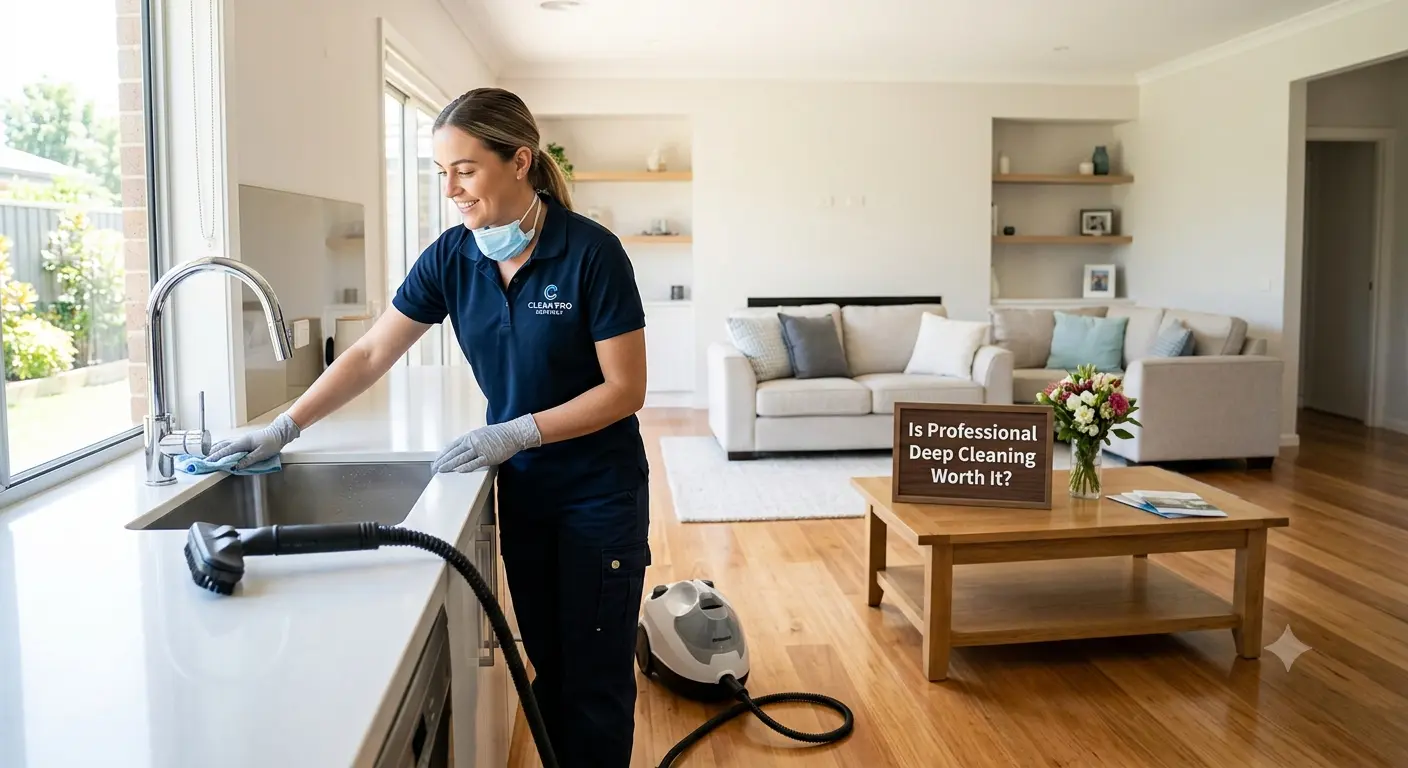
Is professional deep cleaning worth it? 5 signs you need one
Professional deep cleaning is worth it for most UK households, but only if one or more specific triggers apply to your situation right now. Rather than answering the cost question in the abstract, it's more useful to flip it: what are the signs actually telling you it's time?
A typical UK deep clean costs £150-£300, averaging around £186 for a three-bedroom house. For households dealing with allergies, a looming tenancy inspection, post-renovation mess, or a routine that's fallen significantly behind, that cost is typically recovered many times over, through improved health, deposit protection, and extended furniture and appliance lifespan. For households where none of those triggers apply, there's no urgent case to make.
What Tips the Answer to Yes
- Cost: around £150-£300 for a standard three-bedroom UK home, averaging roughly £186, varying by region and scope.
- Allergen removal: dust mites and allergens embedded in soft furnishings and carpets are a leading trigger for asthma and allergy flare-ups, and routine cleaning rarely reaches them properly.
- Deposit protection: cleaning accounted for 29.37% of all Deposit Protection Service claims in 2025, the top reason for the fifth consecutive year; a professional clean with a dated receipt is frequently accepted as sufficient evidence of a proper standard.
- Frequency: most UK homes genuinely benefit from a professional deep clean once or twice a year, alongside, not instead of, regular weekly maintenance.
Sign one: your weekly routine has fallen behind and you know it
The most common reason people book a deep clean isn't a special occasion, it's that regular cleaning has quietly slipped, and the gap between what a normal wipe-down covers and what the home actually needs has been growing for weeks or months.
This is worth recognising as a legitimate, common trigger rather than something to feel embarrassed about. A professional deep clean is specifically designed to bridge this kind of gap, resetting a home to a proper baseline in one go, rather than requiring sustained catch-up effort over several weeks. If this applies to your situation, a professional clean is likely to deliver proportionate value.
Sign two: you or someone in your household has allergies or asthma
Dust mites and allergens trapped in soft furnishings and carpets are a leading trigger for asthma and allergy flare-ups. This is one of the most evidence-backed reasons to book a professional deep clean rather than relying purely on routine cleaning.
Ordinary vacuuming doesn't significantly reduce dust mite allergen levels on its own, it's HEPA-filtered equipment, specifically, that captures the microscopic particles a standard vacuum simply recirculates. Regular vacuuming and dusting address surface-level dirt, but allergens embed considerably deeper, into mattresses, upholstery, and carpet fibres, than a standard cleaning routine typically reaches. If you've noticed allergy symptoms worsening at home specifically, that's a concrete, health-related sign worth acting on. If this applies, it's worth it: the health benefits are well-documented and the alternatives compare less favourably.
Sign three: you're moving in, moving out, or facing an inventory check
Moving is one of the clearest, most widely recognised triggers for booking a professional deep clean, for good reason on both sides of a move. Moving into a new home means dealing with whatever the previous occupants left behind, visible or otherwise. Moving out often means satisfying a specific documented standard tied to your original inventory report.
This matters practically. Cleaning accounted for 29.37% of all Deposit Protection Service claims in 2025, the single biggest reason UK tenants lose part of their deposit, and our breakdown of why cleaning causes so many deposit disputes covers this in more detail. A professional clean, backed by a dated receipt showing the specific work completed, is frequently accepted by deposit schemes as strong evidence of a proper standard being met. If this applies, the financial case is clear: the cost of the clean is almost always lower than the cost of a disputed deduction.
Sign four: you've recently had building or renovation work done
Post-renovation dust is a genuinely different problem from everyday household dirt, and it's one of the clearest signs a professional deep clean is actually warranted rather than a standard tidy-up. Construction dust settles into places a normal clean never reaches, inside sockets, behind skirting boards, in extractor vents, and can linger for weeks after visible debris has already been cleared.
This isn't purely a cosmetic concern. Fine construction dust can affect air quality and aggravate respiratory symptoms if left unaddressed, particularly for children, elderly household members, pregnant women, and anyone with an existing respiratory condition. Professional post-renovation cleaning uses HEPA-filtered equipment capable of capturing 99.97% of particles down to 0.3 microns, specifically targeting these hidden areas rather than redistributing dust the way a standard vacuum often does. If this applies, a standard clean won't be sufficient.
Sign five: it's been over six months since the last proper deep clean
Most UK homes benefit from a professional deep clean once or twice a year. If you're struggling to remember exactly when the last one happened, that's usually a reliable indicator that enough time has passed.
This isn't about any single visible problem, it's about the gradual, largely invisible build-up that happens in every home regardless of how diligent day-to-day cleaning habits are. Areas like behind large appliances, inside extractor fans, grout lines, and the tops of cupboards accumulate grime steadily over months, simply because these spots fall outside the scope of routine weekly cleaning. If this applies, it's worth treating it as standard maintenance, not an optional luxury. Our Bristol deep cleaning team can build this into a regular twice-yearly schedule if that's easier than remembering to book it yourself.
| Sign | What it usually means |
|---|---|
| Routine has slipped | Reset to a proper baseline in one visit |
| Allergies or asthma | Health-driven, evidence-backed case |
| Moving or inventory check | Clear financial case, deposit protection |
| Recent renovation work | Standard cleaning genuinely isn't sufficient |
| 6+ months since last deep clean | Preventive maintenance, not an emergency |
Weighing the actual cost against what you get
On average, a professional deep clean for a three-bedroom UK house costs £150-£300, averaging around £186, depending on region and the specific scope involved. It's worth being honest about what that figure actually protects, beyond the immediate result of a cleaner-looking home.
Professional cleaning helps prolong the life of furniture, carpets, and appliances, a genuine financial saving, even if less immediately visible, by delaying the need for costly replacements. Combined with deposit-dispute protection for renters and meaningful health benefits for allergy-sensitive households, the upfront cost frequently pays for itself across multiple practical benefits. In most cases where one of the five signs above applies, the alternatives, allergen build-up, a contested deposit deduction, or the eventual cost of addressing months of accumulated grime, don't compare favourably.
When it genuinely isn't necessary yet
It's worth being balanced here. If your regular routine is genuinely keeping pace, nobody in the household has respiratory sensitivities, you're not facing a move or inspection, no renovation work has recently been completed, and it's been under six months since your last thorough clean, there's no particular urgency.
The five signs above are useful precisely because they're specific rather than vague. If none of them currently apply to your situation, sticking with your regular routine for a while longer is entirely reasonable.
Weighing DIY effort against professional cost honestly
Before booking, it's worth genuinely comparing what a DIY deep clean would actually cost in time against the professional price, rather than assuming DIY is automatically cheaper simply because no invoice changes hands. A genuinely thorough deep clean of a full house realistically takes a full day or more of sustained effort, time that has real value even if it's not a figure most people would normally put in writing.
For many households managing work, children, or other demands, the professional cost compares favourably once the actual hours required for a proper DIY equivalent are factored in, along with any specialist equipment or products needed for a one-off job that a professional service already owns and uses daily. You can see what's included in a typical visit on our main deep cleaning page.
What happens if you skip a needed deep clean entirely
It's worth understanding the genuine cost of postponing a deep clean when one of the five signs above clearly applies, because the consequences compound rather than staying static. Allergen build-up in carpets and upholstery continues accumulating the longer it's left, worsening symptoms for anyone genuinely affected. A contested deposit deduction, if cleaning standards fall short at a tenancy's end, routinely costs more than the clean itself would have.
General grime, left unaddressed for extended periods, becomes considerably harder and more costly to fully remove the longer it's allowed to build up. The longer it's left, the harder it becomes, that logic applies consistently across all five signs.
What a professional visit actually covers, versus what you might expect
Part of deciding whether a deep clean is worth it comes down to knowing what's actually included, since the term gets used loosely across the industry. A genuine deep clean goes well beyond a standard tidy: it covers inside ovens and extractor fans, behind and underneath large appliances, grout and tile lines, skirting boards, window frames, and the build-up in bathrooms that a weekly wipe-down never quite reaches.
It's reasonable to ask a provider exactly what's covered before booking, since scope varies between companies and can affect the price quoted. A clear checklist, agreed before the visit, avoids the common disappointment of paying for a "deep clean" that turns out closer to a standard clean with a different name. This is also where a dated, itemised receipt becomes useful again, both for your own records and, where relevant, as evidence for a landlord or agent.
Choosing a provider you can actually trust with the job
Once you've decided a deep clean is worth booking, the next practical question is who to book it with. Insurance is worth checking first: a reputable residential cleaning provider should carry public liability cover, and be willing to confirm this if asked directly.
Beyond insurance, look for a provider that gives a written scope of work, uses its own HEPA-filtered equipment rather than relying entirely on whatever's already in the property, and offers a dated receipt or invoice as standard, not as a special request. Reviews focused specifically on deep cleaning, rather than general reviews for a cleaning company's whole range of services, tend to be a more reliable signal of how thorough a specific visit is likely to be.
Frequently asked questions
How much does a professional deep clean typically cost in the UK?
Around £150-£300 for a standard three-bedroom house, averaging roughly £186, varying by region and the specific scope of work included. Most households find this cost justified by furniture and appliance longevity alone, without factoring in health or deposit-related benefits.
Can a deep clean genuinely help with allergies and asthma symptoms?
Yes, particularly when it uses HEPA-filtered equipment on mattresses, upholstery, and carpets, where dust mites and allergens embed more deeply than routine cleaning or ordinary vacuuming reaches. This is one of the more evidence-backed reasons to book a professional deep clean rather than relying on regular cleaning alone.
Is a professional clean worth it before moving out of a rental property?
Generally yes. Cleaning accounted for 29.37% of all Deposit Protection Service disputes in 2025, the leading cause of UK tenancy deposit disputes, and a professional clean with a dated receipt is often accepted as strong evidence of a proper standard, typically costing considerably less than a contested deposit deduction would.
How often should a typical UK household get a professional deep clean?
Once or twice a year suits most households, treated as routine preventive maintenance alongside regular weekly cleaning rather than a replacement for it. This interval helps prevent the gradual, hidden build-up that becomes harder and costlier to address if left significantly longer.
Is professional deep cleaning worth it if my home already looks reasonably clean?
Visible cleanliness and deep cleanliness are different things. Grout, extractor vents, behind appliances, and upholstery fibres accumulate grime and allergens that aren't visible to the eye. If one of the five signs above applies, particularly an allergy concern or a six-month gap since the last deep clean, the case for booking one holds even in a visually tidy home.
What's the difference between a regular clean and a professional deep clean?
A regular clean maintains surface-level cleanliness, wiping surfaces, vacuuming floors, cleaning visible areas. A professional deep clean goes further: it targets embedded dirt, hidden build-up, and areas outside the scope of weekly maintenance, using specialist HEPA-filtered equipment and techniques. The two are complementary, not interchangeable.