

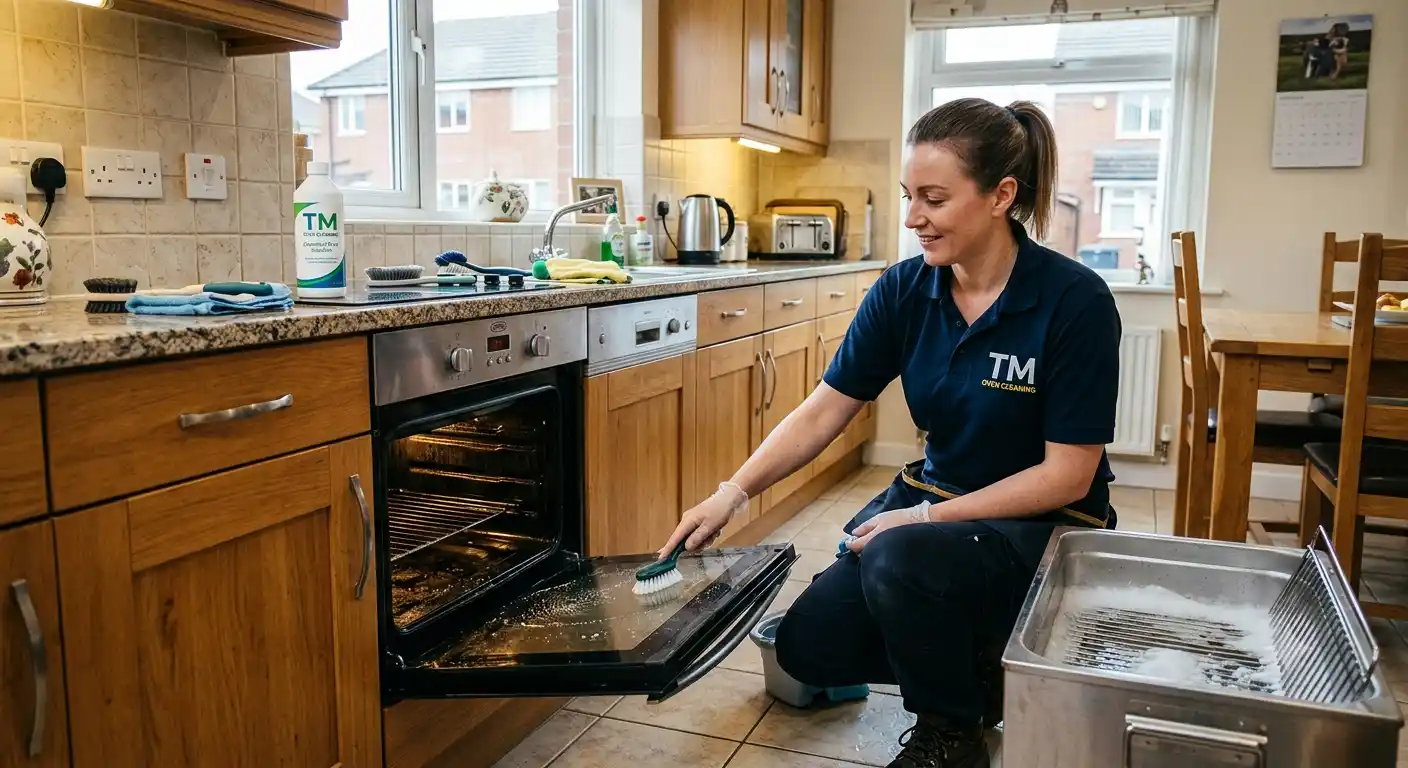
How to clean an oven: racks, door glass and trays
You've just pulled a tray of roast potatoes out, and as you check on the joint underneath, you see it properly for the first time in weeks: the door glass gone cloudy with baked-on splatter, the racks crusted along every edge, a tray at the bottom that's more black than metal. Cleaning an oven properly means tackling each part differently, and here's exactly how.
What Actually Works
- Oven racks: soak overnight in hot water and biological washing powder, then wipe away loosened grease with a non-abrasive scrubber.
- Oven door glass: apply a baking soda and water paste, leave for 20-30 minutes, then wipe with a damp cloth and finish with a glass cleaner.
- Oven trays: use the same biological washing powder soak as racks, followed by a baking soda paste for stubborn burnt-on marks.
- The rubber door seal: use a damp cloth and an old toothbrush to reach into the seal's grooves, since a standard wipe-down consistently misses it.
- Call a professional when racks and trays have months of baked-on grease, or when you're working against a deadline like a tenancy inspection.
There's a reason most ovens only get a proper clean a few times a year rather than as part of a regular routine, it's genuinely one of the least pleasant jobs in the house. Grease bakes on with every use, building up in layers that get harder to shift the longer they're left, and the smell and mess involved make it an easy task to postpone indefinitely.
The problem with postponing it is that oven grime doesn't stay static. Every cooking session adds another thin layer on top of the last, and what would have been a fairly quick wipe-down after a month becomes a genuinely stubborn, baked-on job after six. Understanding the right method for each part of the oven makes the eventual clean considerably less painful, whenever you finally get round to it.
How to clean oven racks: the overnight soak method
The most effective way to clean oven racks is to soak them overnight in hot water mixed with biological washing powder. This breaks down fatty, baked-on grease without heavy scrubbing, because biological powder contains enzymes specifically formulated to break down the kind of organic, fatty residue that oven grease is made of.
Remove the racks entirely and place them in a large sink or bathtub, lined with old towels to stop the metal scratching the surface underneath. Submerge them in hot water mixed with biological washing powder and leave them for several hours, ideally overnight. Most of the grime should wipe away with minimal effort once the soak has had time to work. For any particularly stubborn patches that remain, a non-abrasive scrubber shifts the rest without damaging the rack's finish.
The mistake most people make: resist the temptation to reach for a wire brush or anything genuinely abrasive, however tough the build-up looks. Scratching the surface doesn't just look worse over time, it actually gives future grease more texture to cling to, making each subsequent clean progressively harder rather than easier.
How to clean oven door glass without scratching it
Apply a paste of baking soda and water to the glass, leave it for 20-30 minutes (longer for heavier soiling), then wipe away with a damp cloth. This lifts baked-on marks without the risk of scratching that abrasive sprays or metal scrapers carry.
Door glass is where a lot of people go wrong, usually by reaching for something too aggressive out of frustration with baked-on marks that won't shift with a normal spray. The better approach is a paste made from baking soda and water, applied generously across the glass and left to sit before wiping away with a damp cloth. Dwell time matters considerably more than how hard you scrub, since baking soda works by gently breaking down grease and residue chemically rather than through abrasive force. A proper glass cleaner afterwards gives the final streak-free polish once the underlying grime has been lifted.
For genuinely stubborn, baked-on debris that survives the baking soda treatment, a plastic scraper can carefully lift it away without scratching the glass, something a metal scraper or abrasive pad would risk doing. Work gently and at a shallow angle rather than pressing hard, letting the scraper's edge do the work.
Cleaning between double-glazed oven door panels
Modern ovens with double-glazed doors hide a genuinely common frustration: grease and condensation building up between the two panes, completely inaccessible to a normal cloth. This looks like it needs a professional or a full door disassembly, but there's a simpler fix most people don't know about. A long, thin cleaning cloth attached to a wooden spoon can be worked into the gap between the panels, sliding back and forth to lift the grime trapped inside without needing to take the door apart at all. It takes patience and some careful manoeuvring, but it's a genuinely effective way to deal with a problem that otherwise looks unsolvable.
The rubber door seal nobody thinks to clean
The rubber seal around the oven door frame traps food crumbs and grease every time the door opens and closes. Because it sits in a groove rather than flat, a standard wipe-down consistently misses it. A damp cloth combined with an old toothbrush is the right tool here, the toothbrush's bristles reach into the seal's grooves in a way a cloth alone simply can't manage.
Regular attention to this specific area, even just occasionally between full oven cleans, prevents a build-up that eventually becomes genuinely difficult to shift, and can affect how well the door actually seals during cooking.
How to clean oven trays
Oven trays respond to the same overnight soak method as racks: hot water and biological washing powder loosens baked-on grease without heavy scrubbing. For burnt-on marks, follow up with a baking soda paste.
Trays tend to get less specific advice than racks or glass, but the same soaking principle applies just as effectively. A tray that's accumulated baked-on residue over multiple uses benefits from a hot water and biological washing powder soak, giving the grease time to loosen before you attempt to scrub anything off by hand. For trays with particularly stubborn, burnt-on marks, a paste of baking soda and a little water, left to sit for a good while before scrubbing, works similarly well here as it does on door glass. Once everything's properly loosened, a non-abrasive scrubbing pad finishes the job without scratching a non-stick coating, which is worth protecting if you want the tray to keep performing well rather than needing replacement sooner than necessary.
| Method | Best for | Time needed |
|---|---|---|
| Biological washing powder soak | Racks and trays, everyday build-up | 4+ hours, ideally overnight |
| Baking soda paste | Door glass, moderate burnt-on marks | 20-30 minutes dwell time |
| Commercial oven cleaner spray | Heavily neglected ovens, faster results | 15-30 minutes, but stronger fumes and requires gloves and ventilation |
Commercial oven cleaning sprays do work faster on genuinely neglected ovens, but they're considerably harsher, which is why the gentler soak-and-paste methods above are worth trying first on racks, trays and glass wherever time allows.
Putting everything back together properly
Once racks, trays and glass have all been cleaned and rinsed, make sure everything is genuinely dry and free of any cleaning product residue before putting it back into the oven. Any leftover chemical residue, whether from washing powder or a baking soda paste that wasn't fully rinsed, can produce an unpleasant smell or even smoke the next time the oven heats up, undoing a lot of the satisfaction of a properly clean oven.
Give everything a final wipe with clean water and a dry cloth, and let pieces air dry fully if you have the time, rather than rushing to reassemble everything and use the oven immediately.
When is it worth calling in a professional instead
Professional oven cleaning is worth considering when racks and trays are heavily soiled after prolonged neglect, or when you're working against a deadline such as a house viewing or end-of-tenancy inspection. If racks and trays have accumulated months or years of baked-on grease, the time and effort needed to shift it through repeated soaking and scrubbing sessions can genuinely exceed what a professional oven cleaning service would charge to do the job properly in one visit.
As a rough guide, professional oven cleaning typically runs £55-£85 as part of a wider deep clean visit, and our pricing breakdown for deep cleaning across the UK covers where that figure sits alongside other kitchen and bathroom tasks. Professional cleaners typically use specialist equipment and products designed specifically for baked-on carbon and grease, achieving a result that's genuinely difficult to match with household products alone, regardless of how much time you're willing to put in.
Choosing the right products for your oven's finish
Not every oven interior responds the same way to every cleaning product. It's worth checking your manufacturer's guidance before applying anything abrasive or strongly chemical to a coated or enamel surface. Some modern ovens have a self-cleaning or catalytic liner that is actively damaged by traditional oven cleaning sprays, since these liners work through a different mechanism entirely and abrasive or caustic cleaning can clog their pores and strip the coating permanently.
If you're unsure what type of interior your oven has, a quick check of the manual or a search using your specific model number is all it takes. Racks, trays and door glass are generally safe for the methods covered above regardless of oven type, since they're separate, removable components rather than part of the oven's internal lining.
Ventilation and safety while you work
Oven cleaning products, even relatively gentle ones like baking soda paste, work considerably better and more safely with proper ventilation throughout the job. Open a window or turn on an extractor fan before you start, particularly if you're using anything stronger than a simple baking soda and water mixture, since fumes from commercial oven cleaning sprays can be genuinely unpleasant to breathe in an enclosed kitchen.
Gloves are worth wearing throughout, even for the gentler methods. Prolonged contact with cleaning products, however mild, can dry out or irritate skin over the length of a full oven clean, a small precaution that makes the whole job considerably more comfortable.
How to build a routine that avoids the worst build-up
The easiest way to avoid ever facing a genuinely dreaded deep clean again is building small, regular habits into your normal cooking routine rather than waiting for things to get bad enough to force action. A quick wipe of the door glass and any obvious spills while the oven is still slightly warm, done every few weeks rather than left to accumulate, prevents grease from ever getting the chance to properly bake on and become stubborn.
Checking the door seal occasionally as part of this routine, rather than only remembering it exists during a full deep clean, keeps that specific trouble spot from becoming a genuine problem. None of this needs to be time-consuming: a few minutes here and there consistently beats an entire afternoon of scrubbing every few months, both for your own effort and for how the oven actually performs day to day. If you'd rather hand the whole job to someone else on a regular schedule, our Manchester deep cleaning team can fold oven care into a routine visit.
You can see the full range of cleaning services we offer if a professional deep clean makes more sense than tackling this yourself.
Frequently asked questions
How long should oven racks soak before cleaning?
Oven racks should soak for several hours at a minimum, ideally overnight, in hot water with biological washing powder. This dwell time does most of the actual work breaking down grease, meaning far less scrubbing is needed once the soak is complete.
Is it safe to use a metal scraper on oven door glass?
No, metal scrapers risk scratching the glass permanently. A plastic scraper, used gently after a baking soda paste has loosened baked-on debris, removes stubborn marks without the scratching risk that a metal tool carries.
Why does the oven door seal need separate cleaning attention?
The rubber seal traps food crumbs and grease every time the door opens and closes, and its grooved shape means a standard wipe-down easily misses it. A damp cloth with an old toothbrush reaches into these grooves properly, where a cloth alone cannot.
When is it worth paying for professional oven cleaning instead of doing it yourself?
Professional cleaning is worth considering when racks and trays are heavily soiled after prolonged neglect, or when working against a deadline such as a house viewing or tenancy inspection. Professional equipment often achieves in one visit what DIY scrubbing would take considerably longer to match, typically for around £55-£85 as part of a wider deep clean.
Can I use the baking soda paste method on self-cleaning ovens?
Baking soda paste is generally safe for removable components like racks, trays, and door glass. However, it should not be applied to self-cleaning or catalytic liner surfaces, as abrasive substances can permanently damage these coatings. Always check your manufacturer's manual before cleaning any interior surfaces.
What's the best way to clean a badly burnt oven tray?
Start with an overnight soak in hot water and biological washing powder to loosen the bulk of the grime. Follow this with a baking soda and water paste applied directly to any remaining burnt-on marks, left to sit for at least 20-30 minutes before scrubbing with a non-abrasive pad. Avoid abrasive scourers on non-stick trays, as these strip the coating and shorten the tray's lifespan.