

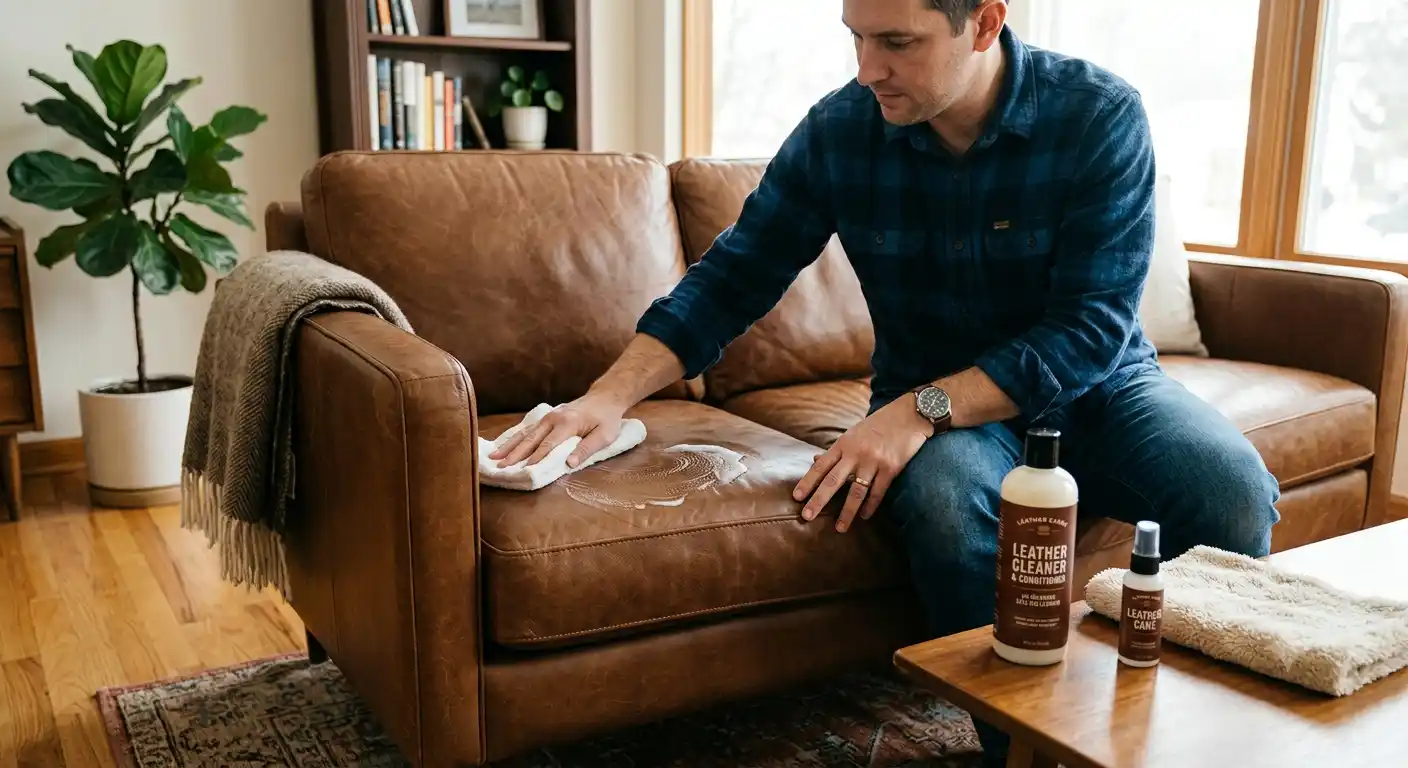
How to Clean a Leather Sofa Without Damaging It
To clean a leather sofa safely, wipe it down with a dry microfibre cloth weekly, clean gently with a barely-damp cloth and mild soap monthly, and apply a leather conditioner every six to twelve months. Avoid baby wipes, household sprays, and excess water — these cause far more damage than everyday use ever does.
Here's the thing nobody tells you about leather sofas: most of them aren't ruined by neglect — they're ruined by cleaning. Baby wipes, kitchen sprays, a good soaking with a wet cloth — the everyday habits that feel helpful are exactly what strip the finish and crack the surface. The actual routine that keeps leather looking good for twenty years is almost embarrassingly simple: a dry wipe once a week, a barely-damp gentle clean once a month, and a proper conditioner twice a year. That's it.
A good leather sofa is one of those purchases you expect to last — fifteen, twenty years if you look after it properly. And that's exactly the problem. Most people don't really know how to look after leather, so they either ignore it completely until it starts cracking, or panic at the first spill and reach for whatever's under the kitchen sink. Both approaches end the same way: a sofa that looks tired years before it should.
The good news is that leather care is genuinely simple once you understand one thing — leather is skin. It dries out, it absorbs what you put on it, and it doesn't appreciate harsh chemicals or soaking. Keep that in mind and most of what follows is common sense.
What type of leather sofa do you have?
Before cleaning a leather sofa, it's important to identify the leather type, as different leathers require different care. The three main types found in UK homes are pigmented leather, aniline leather, and nubuck or suede-effect leather.
| Leather type | How to identify it | Care level |
|---|---|---|
| Pigmented (protected) | Water drop sits on the surface; uniform feel | Most forgiving — this guide's advice applies fully |
| Aniline | Water drop soaks in and darkens; visible grain | Be cautious — less moisture, gentler products |
| Nubuck / suede-effect | Brushed, velvety texture | No wet cleaning — specialist care only |
Pigmented (protected) leather is the most common type found in UK sofas. It has a thin protective coating, feels slightly uniform to the touch, and water dripped on it will sit on the surface rather than soaking in. This is the most forgiving type, and the advice in this guide is written mainly with it in mind.
Aniline leather is the more expensive, natural-looking type — soft, warm, and with visible grain variation. Water dripped on aniline leather soaks in and darkens the patch. If that's what you have, be far more cautious: less moisture, gentler products, and a much stronger case for professional cleaning when anything goes wrong.
Nubuck and suede-effect leather have a brushed, velvety texture — these shouldn't be wet-cleaned at all in most cases, and genuinely deserve a specialist.
Not sure which type you have? Do the water-drop test on a hidden spot — the back corner near the floor, or under a seat cushion. Sits on top: pigmented. Soaks in and darkens: aniline. When in doubt, treat it as aniline and be gentle.
Weekly leather sofa care
The single best thing you can do for a leather sofa costs nothing and takes two minutes: a weekly wipe-down with a dry or very slightly damp microfibre cloth.
Dust doesn't look like much, but it's mildly abrasive. Every time someone sits down and shifts about, that fine layer of dust gets ground gently into the surface — and over months and years, that's what dulls the finish and wears the coating down along the seat edges and armrests. A quick weekly wipe, plus a run over the crevices with the soft brush attachment on your hoover, removes the grit before it can do any damage.
Pay particular attention to the crevices between cushions and along the seams — that's where crumbs, coins, pet hair, and general debris collect, and where the leather gets flexed the most.
How to clean a leather sofa: monthly deep clean
Once a month or so, go a step further. Here's how to clean a leather sofa properly at home:
- Mix a couple of drops of mild soap — something like a gentle hand soap or a small amount of washing-up liquid — into a bowl of lukewarm water.
- Dip a microfibre cloth in, then wring it out until it's barely damp. This matters more than anything else in this guide: the cloth should feel almost dry to the touch. Leather and standing water do not mix.
- Wipe the sofa down in sections, working with light, circular motions. Don't press hard, and don't go over the same spot repeatedly.
- Follow up with a second clean, dry cloth to lift off any soap residue and moisture.
- Let the sofa dry naturally — not with a hairdryer, not pushed up against a radiator. Direct heat dries leather out aggressively and is one of the quickest routes to cracking.
Leather sofa care schedule at a glance
| How often | Task | What to use |
|---|---|---|
| Weekly | Dry wipe-down, hoover crevices | Dry microfibre cloth, soft brush attachment |
| Monthly | Gentle clean | Barely-damp cloth, few drops of mild soap |
| Every 6–12 months | Conditioning | Purpose-made leather conditioner |
| As needed | Spills and stains | Blot with dry cloth immediately |
How to remove stains from a leather sofa
For most spills: blot — don't rub — with a clean, dry cloth as soon as the spill happens. Rubbing pushes liquid deeper into the surface and spreads it wider; blotting lifts it out. For most spills on pigmented leather, quick blotting followed by a wipe with a barely-damp cloth is all it takes.
| Stain type | First response | DIY-safe? |
|---|---|---|
| Drink spills (tea, wine, juice) | Blot immediately with a dry cloth, then wipe with a barely-damp cloth | Yes, on pigmented leather |
| Grease and oil marks | Talcum powder or cornflour, leave a few hours, brush away | Yes |
| Ink and biro | Don't attempt DIY remedies | No — call a leather technician |
| Dye transfer (dark jeans on pale leather) | Gentle clean may help if fresh | Usually no — professional job |
For greasy marks — the classic culprit being hair or hand oils on armrests and headrests — sprinkle a little talcum powder or cornflour on the mark, leave it a few hours to absorb the oil, then brush it away gently. The powder draws the oil up out of the surface rather than pushing it around.
For ink or biro marks: proceed with extreme caution. Biro marks on leather are notoriously stubborn, and most DIY remedies — hairspray, nail varnish remover, alcohol wipes — can strip the colour and finish along with the ink, leaving a pale patch that looks worse than the original mark. For ink on a sofa worth keeping, a professional leather technician is nearly always the right call.
What not to use when cleaning a leather sofa
Some of the most common leather-cleaning mistakes involve products that seem harmless. The following should never be used on a leather sofa:
- Baby wipes and household surface wipes — they contain alcohol and chemicals that break down leather's finish over time. This is probably the most common leather-damaging habit in British homes.
- Bleach, disinfectant sprays, and all-purpose kitchen cleaners — far too harsh; will strip and discolour the leather.
- Vinegar in anything more than heavy dilution — it's acidic, and leather doesn't tolerate it well.
- Furniture polish designed for wood — leaves a residue and can make leather slippery and sticky over time.
- Excess water — in any form.
If a product doesn't specifically state it's safe for leather, keep it away from the sofa.
How to condition a leather sofa
Leather conditioning is the step most people skip — and it's one of the most important. Cleaning removes dirt, but conditioning replaces the natural oils that leather loses over time.
This matters particularly in centrally heated UK homes where the air runs dry for half the year. Without regular conditioning, leather gradually becomes stiff and creased, eventually cracking — a process that's largely preventable.
To condition a leather sofa:
- Apply a small amount of leather conditioner to a clean cloth.
- Work it into the leather using light circular motions.
- Buff off any excess after approximately twenty minutes.
- Always test on a hidden area first — some conditioners can slightly darken lighter leathers.
Condition every six to twelve months under normal conditions. Sofas placed near radiators or in direct sunlight need conditioning more often, as both heat and UV accelerate the drying-out process. Where possible, keep a leather sofa at least a foot or two away from a radiator, and out of the direct beam of a south-facing window.
What about faux leather sofas?
Faux leather (PU or PVC) is more forgiving than real leather in one way — it tolerates gentle wipes better, and fragrance-free baby wipes that damage real leather are generally fine on faux. But it's less forgiving in another: faux leather can't be conditioned or restored, so once the surface starts peeling or cracking, there's no bringing it back. Clean it with a soft damp cloth and mild soap, keep it away from direct heat and sunlight, and never use abrasive scrubbers — the surface coating is thinner than it looks.
When to call a professional leather cleaner
DIY care handles routine maintenance well, but some situations are better left to a professional upholstery specialist:
- Ink, dye transfer (dark jeans onto pale leather — very common), or any stain that hasn't lifted with gentle cleaning
- Aniline, nubuck, or suede-effect leather that needs more than a dust
- Cracking, fading, or colour loss — these typically require re-colouring rather than cleaning
- A sofa that hasn't received any care in years and needs a restorative deep cleaning service
A professional upholstery clean costs a fraction of replacing a quality leather sofa. Done periodically, it's what keeps a good sofa looking good well into its second decade. If your leather sofa is part of a wider home refresh — or it's simply been a few years — it's worth having it assessed alongside a proper clean of the room around it. Short on time? Our guide to the best way to quickly deep clean a home covers exactly that, and if you're in the capital, our deep cleaning specialists in London can take the whole job off your hands. Book a free consultation to get started.
Frequently Asked Questions
Can I use baby wipes to clean a leather sofa?
No — and this is one of the most common causes of leather damage in UK homes. Baby wipes contain alcohol and cleansing agents that gradually break down leather's protective finish, leading to fading, stickiness, and cracking over time. A barely-damp microfibre cloth with a drop of mild soap is far safer. The exception is faux leather, where fragrance-free wipes are generally fine.
How often should a leather sofa be cleaned?
Wipe down a leather sofa with a dry microfibre cloth weekly, give it a gentle clean with mild soap and a barely-damp cloth monthly, and apply a leather conditioner every six to twelve months. Sofas near radiators or in direct sunlight benefit from more frequent conditioning.
How do I remove ink or biro from a leather sofa?
Very carefully — or ideally, not yourself. Most DIY ink remedies like hairspray or alcohol can strip the leather's colour along with the ink, leaving permanent pale patches. For ink stains on a sofa worth keeping, a professional leather technician will achieve a far better result.
Why is my leather sofa cracking?
Cracking is almost always caused by leather drying out — typically from central heating, direct sunlight, or years without conditioning. Regular conditioning every six to twelve months replaces the natural oils leather loses and keeps the surface supple. Once deep cracking has set in, professional restoration is usually needed.
What is the best homemade leather sofa cleaner?
A few drops of mild soap — such as gentle hand soap or a small amount of washing-up liquid — mixed into a bowl of lukewarm water is the safest homemade option. Apply with a cloth wrung out until barely damp, then dry immediately with a second cloth. Avoid vinegar, bicarbonate of soda, and any alcohol-based mixtures.
Can I use olive oil or coconut oil to condition a leather sofa?
Natural oils like olive or coconut oil are sometimes recommended online, but they are not advisable for leather sofas. They can go rancid over time, attract dust, and may darken or stain the leather unevenly. A purpose-made leather conditioner is a safer and more effective choice.