
Choosing the Best Carpet Cleaning Solution
A beautifully maintained carpet can instantly elevate the warmth and aesthetic of any room, but keeping it pristine requires more than just a quick run-around with the vacuum. Whether you are dealing with a sudden spill, lingering pet odours, or general wear and tear, Choosing the Best Carpet Cleaning Solution is the most crucial step in restoring your floor coverings to their former glory.
With countless options flooding the market—from heavy-duty extraction fluids to gentle botanical blends—making the right choice can feel overwhelming. Using the wrong product can result in sticky residues, damaged fibres, or faded colours. This comprehensive guide will walk you through everything you need to know to select the perfect formula for your home or business, ensuring flawless, long-lasting results.
Choosing the right method is essential for maintaining long-lasting results. Whether you're dealing with stains, allergens, or daily wear and tear, investing in professional carpet cleaning services in the UK can significantly improve the cleanliness and lifespan of your carpets.
Understanding Your Carpet: The First Step
Before pouring any liquid into your machine, you must understand exactly what you are cleaning. Knowing how to identify carpet fibre types is essential because synthetic materials (like nylon or polyester) and natural materials (like wool or silk) react very differently to cleaning agents.
Synthetic carpets are highly durable and can generally withstand a robust carpet cleaning solution. However, natural fibres require much more delicate care. For instance, using highly alkaline products on wool can cause the fibres to become brittle or bleed colour. Instead, you must seek out pH-balanced formulas for wool rugs to ensure the material remains soft and vibrant. If you are specifically tackling loose floor coverings, investing in dedicated rug cleaner products or a mild rug cleaning detergent is highly recommended over generic, harsh chemicals.
If you're based in the capital, working with trusted local experts makes all the difference. Our specialist carpet cleaning team in London uses advanced techniques and eco-friendly products to deliver deep and effective cleaning results for homes and businesses.
The Science Behind the Suds
To make an informed decision, it helps to understand a bit about surfactants and carpet cleaning chemistry. Surfactants are the active ingredients that break down the surface tension of water, allowing the carpet cleaner solution to penetrate deep into the pile, detach dirt, and suspend it so it can be extracted.
However, there is a catch. If your chosen carpet shampooing chemical leaves soap behind, it will actually attract dirt. This is why investing in residue-free carpet cleaning products is absolutely vital for preventing re-soiling after cleaning. When you use a high-quality product, the active ingredients dry down into brittle crystals that are easily vacuumed away, leaving nothing behind but clean, soft fibres.
Types of Carpet Cleaning Liquids and Formulas
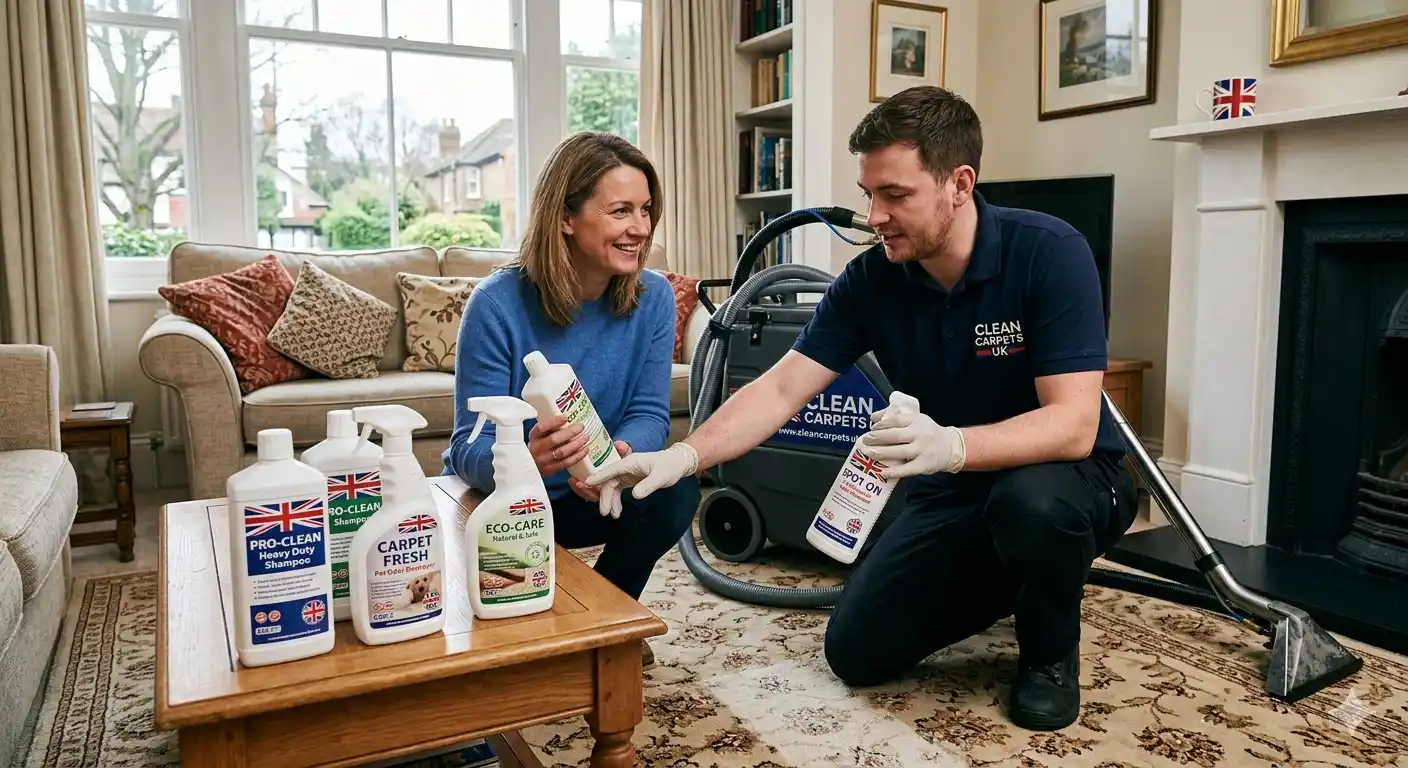
Navigating the aisles (or online stores) reveals a staggering array of terminology. Let's break down the most common types of carpet and rug cleaning products available today:
- Carpet Shampoo: A traditional carpet shampoo or carpet shampoo liquid typically produces a rich foam to lift dirt. It is excellent for surface cleaning, though it requires thorough extraction.
- Extraction Fluids: If you are using a machine, you need a specific carpet cleaner fluid designed for deep extraction. The best carpet extractor solution will be low-foaming, preventing your machine from overflowing with bubbles.
- Carpet Washer Solutions: Similar to extraction fluids, a dedicated carpet washer solution or carpet scrubber solution is formulated to pass through mechanical jets smoothly without clogging the internal components.
- Rug Specialities: Rugs often have unstable dyes. Using a targeted rug cleaning liquid, rug cleaning shampoo, or specialised rug cleaning chemicals ensures that delicate fringes and woven patterns are not compromised.
Steam Cleaning vs. Dry Foam
When looking at different methods, you might wonder about steam cleaner soap vs dry foam shampoo. Steam cleaning (hot water extraction) relies on injecting hot water mixed with a carpet cleaning fluid deep into the pile and immediately vacuuming it up. It is widely considered the most effective method for a deep clean. Conversely, dry foam shampoos are ideal for moisture-sensitive fabrics or commercial environments where rapid drying times are essential.
Tackling Specific Carpet Challenges
Different stains and environments demand different approaches. A generic carpet cleaner liquid might not cut it for specialised messes.
High-Traffic Areas
Hallways, living rooms, and office floors endure a tremendous amount of footfall. For these zones, you need the best carpet shampoo for high traffic areas—typically a heavy-duty carpet shampoo solution that contains advanced polymer technology to encapsulate dirt and protect the fibres against future wear.
Deep-Set Stains
For older, stubborn blemishes, removing deep set-in carpet stains often requires a pre-treatment before applying your main carpet cleaning liquid. Look for targeted spot treatments that break down tannins (like tea and coffee) or grease (like makeup and food spills) before running your machine.
Pet Messes
Pet owners know the struggle of lingering smells. Standard detergents often just mask the scent. To truly neutralise the problem, you must use enzymatic cleaners for pet urine odours. These sophisticated formulas contain friendly bacteria that literally "eat" the organic matter causing the smell, removing it entirely at the source.
Health, Safety, and Eco-Friendly Options
Modern households are increasingly conscious of the chemicals they bring indoors. If you have young children or pets crawling on the floor, you will want to prioritise non-toxic carpet cleaners for pets and kids. Fortunately, the industry has evolved, and there are now numerous eco-friendly alternatives to chemical detergents that rely on plant-based ingredients to achieve professional results.
For households prone to allergies, strongly scented products can trigger sneezing and asthma. Opting for fragrance-free hypoallergenic carpet detergents ensures that the air quality in your home remains pure and unpolluted.
You might also be wondering: are homemade carpet cleaning solutions safe? While a mixture of white vinegar and baking soda can be a fantastic, eco-friendly quick fix for a small spot, it is not recommended as a primary cleaning solution for carpet cleaner machines. Homemade concoctions can leave sticky residues, void machine warranties, or fail to provide the deep, sanitising clean that a commercial carpet cleaner product guarantees.
For reliable and professional results, it's always best to work with experienced cleaning providers. Tidy Spaces professional cleaning services across the UK offer tailored carpet cleaning solutions designed to suit both residential and commercial needs.
Professional Grade vs Consumer Products
When browsing carpet cleaning products, you will notice a distinct divide between professional grade vs consumer carpet shampoos.
- Consumer Products: A standard carpet cleaner shampoo bought from the local supermarket is usually pre-mixed or requires a very simple dilution. These are formulated to be foolproof, ensuring that even a novice won't accidentally damage their floors.
- Professional Grade: Professional rug cleaning solutions and carpet chemicals are highly concentrated and targeted. They require an understanding of pH levels and specific dilution ratios for carpet extraction machines. Getting the ratio wrong can result in either an ineffective clean or a soapy residue that ruins the carpet.
If you are renting a commercial-grade machine, investing in a professional carpet cleaning solution for carpet cleaner units is generally the best route, provided you read the manufacturer's guidelines carefully.
Where to Buy and Cost Considerations
Finding the right supplies is easier than ever. If you are asking yourself, where can I buy carpet shampoo? or where to buy carpet shampoo for my specific machine?, you have several avenues.
Large home improvement stores and DIY centres carry a vast range of mainstream carpet shampoo products. For more specialised items, such as a highly specific carpet scrubber solution or commercial-grade detergent, carpet cleaning supply wholesalers and dedicated online retailers are your best bet. When searching online, try phrases like "rug cleaning solutions" or supplier tags such as "detergent carpet" to surface niche options and technical-grade concentrates.
When it comes to the carpet shampoo price, you generally get what you pay for. Budget options might seem appealing, but they often require you to use twice as much liquid to achieve a mediocre result. Investing in a premium, highly concentrated carpet cleaner solution often works out cheaper per square metre. Furthermore, a high-quality product protects the lifespan of your flooring, saving you thousands of pounds in premature replacement costs.
Top Tips for Machine Washing Your Carpets
To achieve the best possible outcome when using your carpet cleaning fluid, keep these practical tips in mind:
- Vacuum Thoroughly First: Never use a wet carpet cleaner liquid on a floor full of loose dirt. Vacuum meticulously to remove dry soil.
- Measure Accurately: Always follow the instructions on your carpet shampooing chemical. Adding extra cleaning solution for carpet cleaner tanks does not equate to a cleaner floor; it only creates excess foam and residue.
- Use Warm (Not Boiling) Water: Unless your machine explicitly heats the water, use warm water from the tap to help activate the carpet cleaner shampoo. Boiling water can melt synthetic fibres.
- Do Not Over-Wet: Pass over the same area slowly, but do not flood the carpet. Follow up with multiple "dry passes" (vacuuming without releasing any carpet cleaning liquid) to extract as much moisture as possible.
- Ventilate the Room: Open windows and doors to encourage airflow. The faster the carpet dries, the less chance there is for damp odours or mould to develop.
The Final Verdict
Choosing the Best Carpet Cleaning Solution does not have to be a daunting task. By taking the time to identify your floor type, understanding the specific challenges you face—be it pet odours, high traffic, or delicate wool weaves—and recognising the difference between various formulas, you can achieve a flawless, professional finish.
Whether you need a heavy-duty best carpet extractor solution for an office overhaul, a gentle rug cleaning detergent for an heirloom piece, or non-toxic carpet cleaners for pets and kids, the perfect product is out there. Remember to prioritise residue-free formulas to protect your investment, and always follow the manufacturer's guidelines for your specific machine. Armed with the right carpet and rug cleaning products, you can breathe new life into your home, ensuring your carpets remain fresh, vibrant, and incredibly welcoming for years to come.
Q&A
Question: How do I choose the right carpet cleaning solution for my carpet's fibre type?
Short answer: Start by identifying the fibre. Synthetic carpets (e.g., nylon, polyester) are durable and usually tolerate more robust formulas. Natural fibres (e.g., wool, silk) need gentle, pH-balanced products—avoid highly alkaline cleaners on wool to prevent brittleness and colour bleed. For loose rugs, use dedicated rug cleaners or mild rug detergents, as rugs often have unstable dyes and delicate fringes that can be damaged by generic or harsh chemicals.
Question: Why is a residue-free formula important, and how does it prevent re-soiling?
Short answer: Soap left behind stays sticky and attracts dirt, making carpets soil faster. High-quality, residue-free products use surfactants that loosen grime and then dry into brittle crystals (encapsulation) that are easily vacuumed away. This leaves fibres clean and soft without a tacky film, helping carpets stay cleaner for longer.
Question: Should I use steam cleaning (hot water extraction) or dry foam shampoo?
Short answer: Choose based on material sensitivity and drying needs. Steam cleaning injects hot water with cleaning fluid and immediately extracts it, delivering a widely recognised deep clean. Dry foam uses minimal moisture, making it better for sensitive textiles or busy environments where rapid drying is essential. Match the method to your fabric and circumstances.
Question: What's the best way to handle pet odours, deep-set stains, and high-traffic areas?
Short answer: Use targeted chemistry. For pet urine odours, choose enzymatic cleaners that digest the organic matter causing smells—standard detergents often only mask them. For deep-set stains, pre-treat with spotters formulated for the specific soil type (tannins like tea/coffee or grease from food/makeup) before machine cleaning. In high-traffic zones, use heavy-duty shampoos with advanced polymers that encapsulate dirt and add protection against future wear.
Question: Are professional-grade products better than consumer options, and where should I buy?
Short answer: Both have a place. Consumer shampoos are pre-mixed or simple to dilute and designed to be foolproof. Professional-grade solutions are concentrated and targeted; they work excellently when you understand pH and dilution for your extractor, but getting the ratio wrong can leave residue or underclean. If renting a commercial machine, pro solutions are ideal—just follow the manufacturer's guidelines. For purchasing, mainstream options are at home improvement/DIY stores; specialised or commercial detergents are best sourced from carpet-cleaning wholesalers or dedicated online retailers. While premium concentrates cost more upfront, they often clean better with less product and can be cheaper per square metre while protecting carpet lifespan.