
Best Practices for Retail Store Cleaning
You walk into a clothing store, taking a breath of crisp air while admiring the glowing floors. Now, recall your worst shopping experience, where dusty shelves immediately made you want to turn around and leave. That instant reaction happens during the psychological "first-impression window." Shoppers unconsciously judge a brand's quality within seven seconds of entering the doors, proving that professional retail store cleaning relies just as heavily on human psychology as it does on basic chores. For those seeking expert retail store cleaning solutions for commercial spaces, understanding this psychology is the first step toward success.
Consider how fast a home entryway gets dirty with just a few family members. Multiply that by hundreds of strangers tracking in daily outdoor grime, and you quickly see why public spaces require intensive maintenance. According to consumer surveys, 95% of shoppers will actively avoid a business after encountering a dirty restroom. This harsh reality dictates the impact of cleanliness on customer foot traffic, because people simply refuse to browse inside uncomfortable spaces.
Achieving a genuinely clean retail environment demands much more than passing a basic eye test. Professionals understand the critical difference between a visual clean, which merely removes obvious surface dirt, and a hygienic clean, which uses targeted disinfectants to kill invisible germs. Sweeping aisles makes a shop look tidy, but actually sanitizing high-touch areas guarantees safety in a clean retail space.
Mastering High-Touch Points: Why the Smallest Surfaces Carry the Most Risk
While hand hygiene is common knowledge, consider the surfaces encountered during a typical shopping trip. Hundreds of hands brush against the exact same surfaces every hour, creating a fast track for cross-contamination—the invisible spread of germs from one object to another.
To build a safer environment, you must know exactly what the high-touch points are in a clothing store. A daily showroom disinfection checklist should always target these top 10 high-risk areas:
- Front door handles
- Credit card terminals
- Shopping baskets
- Clothing hangers
- Display racks
- Checkout countertops
- Fitting room locks
- Mirror edges
- Stair railings
- Elevator buttons
A quick swipe with a towel won't cut it, however. Professional cleaners rely on a rule called "dwell time," which is the specific number of minutes a disinfectant must stay wet on a surface to actually kill bacteria. Think of it like soaking a stubborn pan in the sink; the chemical needs time to do the heavy lifting before you wipe it away.
These guidelines are especially important for enclosed, high-traffic spaces. Sanitizing fitting rooms after customer use involves spraying the hardware and benches, then letting that liquid sit for its full dwell time while you hang discarded clothes. Mastering these small surfaces allows you to focus on the largest surface of all: the floor.
Commercial Floor Care That Prevents Slips and Boosts Store Aesthetics
Take the frequency of cleaning a residential floor and multiply that foot traffic by a thousand. Retail floors endure constant abuse, making commercial floor maintenance best practices vital for both aesthetics and safety. How often should shop floors be mopped? High-traffic aisles require daily attention, but the method matters just as much as the schedule. Steam cleaning works wonders for deeply textured tile, but flat microfiber mops are far more efficient for smooth surfaces because they trap dirt instead of just pushing dirty water around.
Leaving puddles behind creates a major safety hazard for shoppers. Microfiber mopping uses less water and dries much faster, preventing slip and fall accidents with proper floor care. This technique also protects your floor's finish—the invisible wax layer that maintains the shine—by keeping harsh, heavy chemicals from soaking into the material.
Even with a perfect daily mopping routine, heavy foot traffic inevitably leaves behind ugly shoe streaks. Removing scuff marks from luxury vinyl tile (LVT) requires a gentle approach so you don't scratch the floor's protective coating. Follow this simple three-step process to safely erase these stubborn blemishes:
- Buff: Rub a clean tennis ball firmly over the mark to naturally lift the rubber friction.
- Clean: Apply a pH-neutral cleaner to a microfiber towel and gently wipe the spot.
- Rinse: Wipe the area with plain water to remove any slippery chemical residue.
Once your aisles gleam, shoppers expect the same clean care everywhere else. They judge it most in your building's most used room.
Restroom Hygiene Standards: The Secret Ingredient for Boutique Brand Loyalty
You just spent twenty minutes admiring beautifully arranged displays, only to walk into a washroom with overflowing trash and sticky counters. That jarring contrast instantly shatters the illusion of luxury. Maintaining flawless restroom hygiene standards for boutiques is crucial because customers link the care you show your facilities directly to the quality of your products.
Masking bad smells with heavy floral sprays only creates a suffocating environment. Truly improving indoor air quality in shopping centers means removing odors at the source. Clean hidden bacteria traps, like floor drains. This proactive approach keeps shoppers comfortable and helps you meet basic OSHA retail sanitation rules. These rules require safe, clean public spaces with running water and enough supplies.
Keeping these areas pristine requires a "cleaning loop"—a routine where staff assesses the room at set intervals instead of waiting for customer complaints. Maintain brand alignment by performing this five-point check every hour:
- Restock: Replenish toilet paper, soap, and paper towels.
- Wipe: Sanitize high-touch faucet handles and sink basins.
- Sweep: Pick up stray paper and floor debris.
- Empty: Clear the trash bins before they overflow.
- Breathe: Verify that exhaust fans are actively pulling air out.
Once the washrooms are secured, confidently turn your attention to protecting the main sales floor.
The Ultimate Daily Showroom Disinfection Checklist
Securing the washroom is just the first step; the main sales floor is where your brand's story actually unfolds. To keep this space welcoming, good managers use a daily showroom disinfection checklist. It is a retail store cleaning checklist that standardizes tasks. Swapping harsh bleaches for eco-friendly commercial cleaning supplies for businesses is a practical way to protect delicate inventory fabrics from discoloration while ensuring the air remains safe for shoppers and staff alike.
Look up at the ceiling, and you might spot the hidden culprit behind a constantly dusty store. High-level dusting targets overhead HVAC vents and tall displays, catching allergens before they blow onto your clean shelves.
Removing this upper layer of grime stops dirt from raining down, drastically cutting down on how much wiping is needed at eye level.
Building a reliable cleaning checklist for retail store operations means dividing the workload to match customer flow. This split schedule makes implementing high-traffic area deep cleaning strategies completely manageable:
- Morning Prep: Execute high-level dusting, wipe glass entrance doors, and sanitize register touchpads before unlocking.
- Evening Reset: Vacuum carpets, mop hard floors to remove tracked-in dirt, and empty waste bins so odors cannot settle.
Consistently executing these routines creates a showroom that feels vibrant and trustworthy to shoppers. However, as your business grows, maintaining this flawless standard internally can stretch your team thin, eventually requiring a strategic choice between maintaining an internal team or outsourcing to professional janitorial services. Engaging professional cleaning services for spotless retail environments ensures consistent, high-quality results without burdening your staff.
Professional Janitorial Services vs. In-House Staff: The ROI of Clean
Handing a mop to your top salesperson carries a hidden price tag. Every minute spent scrubbing baseboards is a minute lost helping shoppers or restocking shelves. When weighing professional janitorial services vs in-house staff, consider this opportunity cost: employees focused on chores cannot simultaneously deliver the attentive, revenue-driving service your customers expect.
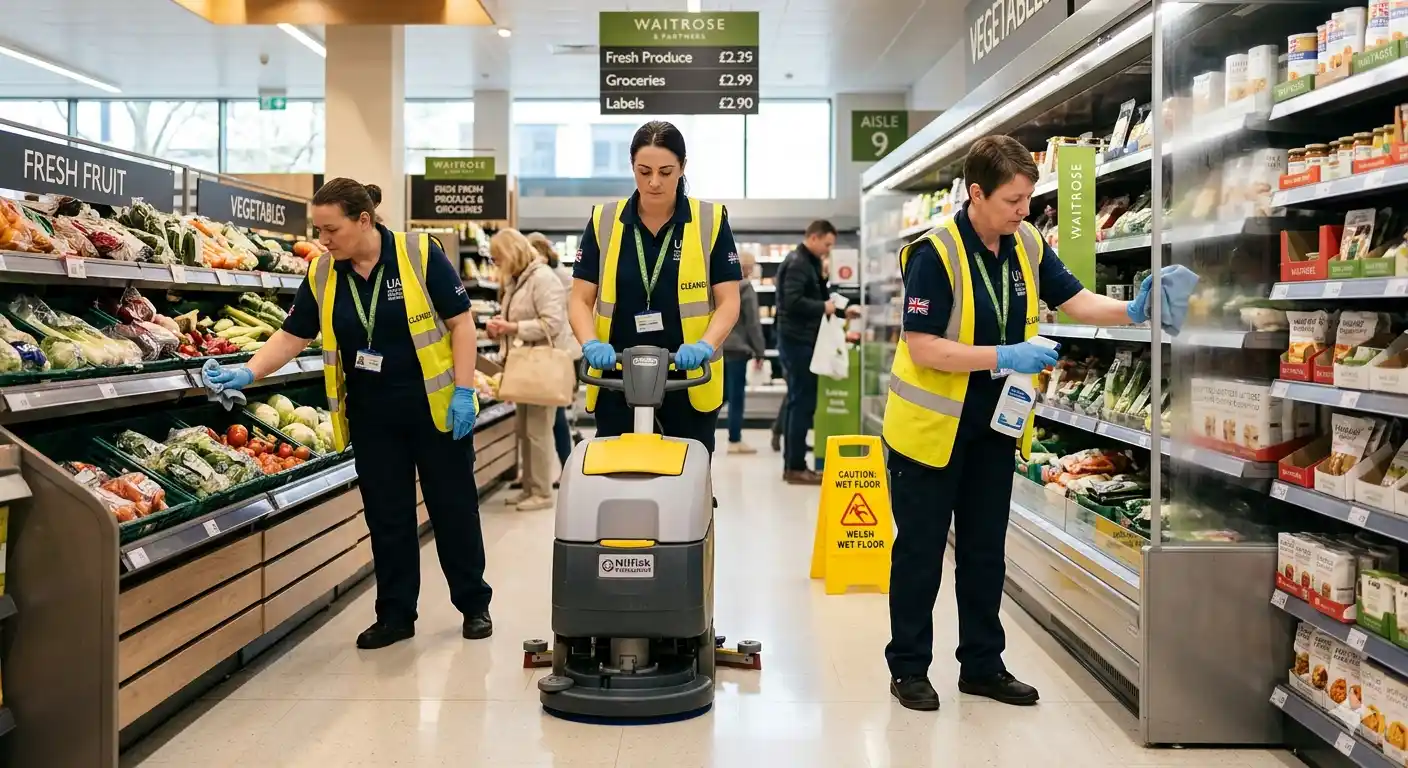
Beyond time, there is a massive gap in equipment capability. A standard household vacuum simply isn't built to handle the daily dirt tracked in by hundreds of heavy boots. Partnering with retail store cleaning services—specialized retail cleaning services—provides access to industrial-grade extractors and high-speed floor buffers you never have to purchase or maintain. This specialized gear removes deep-set grime efficiently, offering a clear return on investment by extending your expensive flooring's lifespan.
Determining the right schedule for retail store commercial cleaning ultimately depends on your daily foot traffic. To decide if it is time to outsource your deep cleaning, ask yourself these four questions:
- Are employees frustrated by staying past their shifts to clean?
- Do store floors look dull immediately after a fresh mopping?
- Is heavy customer traffic causing consumer-grade cleaning tools to break?
- Could staff generate more sales if freed from daily maintenance?
Answering "yes" indicates an interior upgrade is needed to support your long-term retail hygiene strategy.
From Cleaning to Curb Appeal: Your Long-Term Retail Hygiene Strategy
Retail store cleaning operates as a powerful marketing asset, not just a daily expense. Transitioning to professional standards actively attracts shoppers. Start with the simplest action for immediate results: perfect your entrance. By keeping front doors streak-free and welcome mats spotless, you immediately capture that vital first impression.
As you master these entry zones, apply the best practices for retail shop cleaning across your entire floor plan. Meticulous maintenance naturally connects safety directly to profitability. A dry, debris-free aisle does more than look beautiful; it prevents slip hazards and silently reassures shoppers that you value their well-being. Every shelf you dust and spill you catch builds long-term brand equity.
That crisp air and gleaming floor you notice when entering a favorite boutique is never an accident. Today, exceptional hygiene is the ultimate form of customer service. A truly clean space invites people to safely linger, browse, and completely trust the products in their hands.
Q&A
Question: Why is the first impression so critical for retail cleaning?
Short answer: Shoppers form an unconscious judgment of your brand within about seven seconds of entering, so visible cleanliness immediately influences trust and willingness to browse. Surveys show 95% of customers avoid businesses after encountering a dirty restroom, proving that hygiene directly impacts foot traffic, dwell time, and perceived product quality.
Question: What's the difference between a visual clean and a hygienic clean, and why does dwell time matter?
Short answer: A visual clean removes obvious dirt and clutter, while a hygienic clean targets and kills invisible germs on high-touch surfaces. Disinfectants need "dwell time"—the minutes they must stay wet on a surface—to work effectively. For example, in fitting rooms, spray hardware and benches, let the disinfectant sit for its full dwell time while you process garments, then wipe—this breaks the chain of cross-contamination instead of just making things look tidy.
Question: Which high-touch points in a clothing store should be disinfected daily?
Short answer: Prioritize surfaces touched by many hands every hour to reduce cross-contamination. Top targets include: front door handles, credit card terminals, shopping baskets, clothing hangers, display racks, checkout countertops, fitting room locks, mirror edges, stair railings, and elevator buttons.
Question: How should we care for retail floors to improve safety and appearance?
Short answer: High-traffic aisles need daily attention, using the right method for the surface. Choose steam cleaning for deeply textured tile, and flat microfiber mops for smooth floors to trap dirt and use less water—this speeds drying and reduces slip risks while protecting the floor's finish. For scuffs on luxury vinyl tile, follow three gentle steps: buff with a clean tennis ball, clean with a pH-neutral solution on a microfiber towel, then rinse with water to remove residue.
Question: When does it make sense to outsource to professional janitorial services?
Short answer: Consider outsourcing when cleaning starts hurting customer service or results. Indicators include employees staying late to clean, floors looking dull right after mopping, frequent breakdowns of consumer-grade tools, and lost sales opportunities because staff are tied up with chores. Pros bring industrial extractors and high-speed buffers, remove deep grime efficiently, and free your team to focus on revenue-driving tasks—often delivering a clear ROI and extending your flooring's lifespan.